
Samsung Galaxy S26 Ultra
Samsung’s Galaxy S26 Ultra is the next-generation flagship smartphone from Samsung’s S-series, expected to arrive in early 2026. Following the S25 Ultra (launched January 2025), rumors and leaks indicate the S26 Ultra will debut roughly a year later, likely around February 2026. Samsung is holding an Unpacked event (rumored in San Francisco) around February 25, 2026, with the new phones reaching stores in early March 2026. This shift reflects delays in production (the Galaxy S26 “Edge” model was reportedly scrapped, pushing the launch later). In sum, the S26 Ultra is shaping up as an incremental but important update – refining the S25 Ultra’s formula with better efficiency, battery and camera tweaks, and new AI features, while retaining its core design and functionality.
Launch Timeline and Pricing
Based on leaks, the Galaxy S26 Ultra will be unveiled in early 2026. TechRadar reports (via tipster @UniverseIce) that Samsung’s Unpacked event is penciled in for February 25, 2026, with sales starting in March. This is roughly a month later than the S25 series last year, reflecting Samsung’s compressed 2026 schedule. No “Edge” variant is expected, so the lineup should include Galaxy S26, S26+, and S26 Ultra only.
Pricing remains uncertain. Some sources say Samsung will freeze flagship prices in 2026 to stay competitive, meaning the S26 Ultra could start at $1,299 (same as S25 Ultra). However, others warn of a price hike: one tipster suggests rising component costs might push 2026 prices higher. For reference, the S25 Ultra began at $1,299/£1,249. We should treat both scenarios as rumors – Samsung has reportedly considered holding prices steady, but market conditions may force a bump. In any case, the S26 Ultra will be sold globally (with the same Snapdragon chipset worldwide), and availability will follow Samsung’s usual rollout (likely first in major markets such as the US, Europe, and Korea).
Design and Build
Leaked images of the S26 Ultra (mock-up units from OnLeaks) show a design evolution that is subtle but noticeable. The new camera module is now a single, pill-shaped “island” across the back, reminiscent of Samsung’s Galaxy Z Fold 7 design. This is a departure from the minimalistic, individual camera cutouts of the last three years. In these renders, the S26 Ultra (shown in silver and black) retains the same rounded-corner profile introduced on the S25 Ultra. The frame still appears to be metal with a glass back, and the device remains large (around 6.9 inches). According to PhoneArena, the Ultra will be slightly taller, thinner, and lighter than its predecessor – even as it sports a slightly bigger battery (more below). The thickness is rumored around 7.9 mm (vs 8.2 mm on S25 Ultra) and weight should drop a few grams.
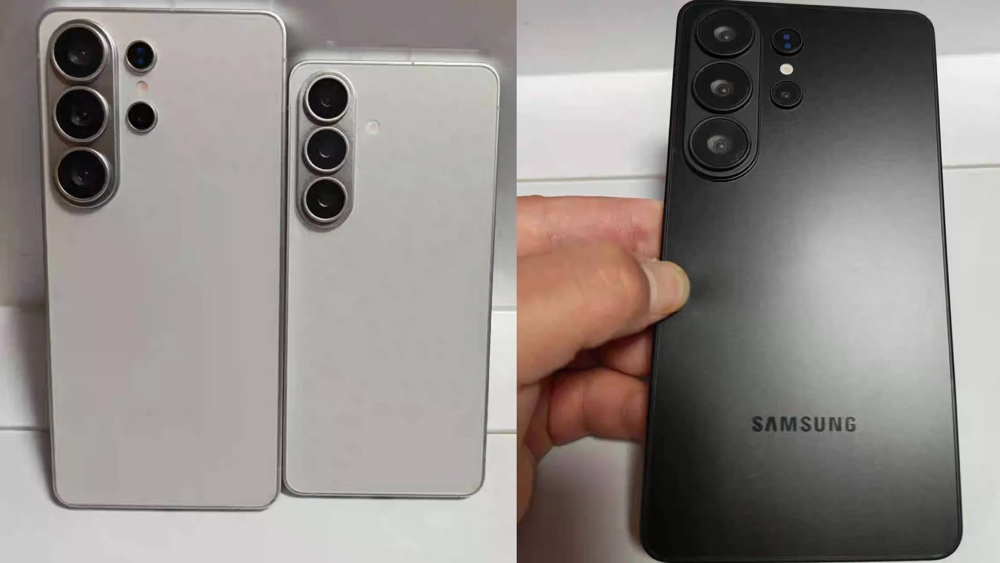
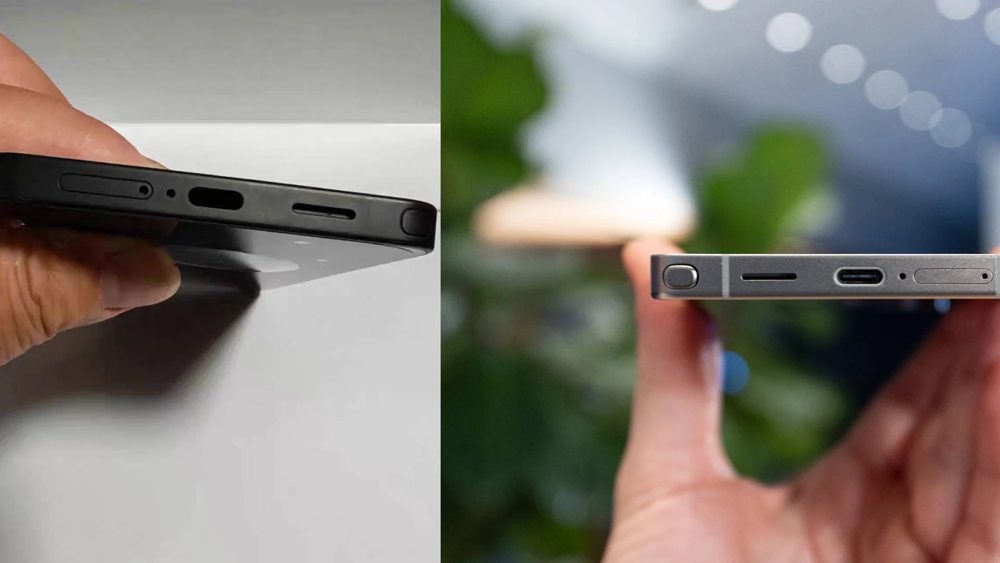
Leaked Galaxy S26 Ultra dummy units (silver and black) reveal the new pill-shaped camera island on the back. One clear change is the S Pen slot: it has been moved closer to the corner of the phone. In images of the Ultra’s base, the stylus slot (on the lower right edge) is slightly closer to the phone’s side, which may improve ergonomics for stylus use. Aside from that, the sides of the S26 Ultra look similar to before: volume rocker and power button on the right, SIM tray on top or side, and USB-C port at the bottom. The top and bottom edges are likely flat and squared off. As in prior Ultra models, the chassis is expected to be metal (likely aluminum or stainless steel) and the back glass.
Close-up of the S26 Ultra’s bottom edge, showing the S Pen slot on the right (shifted slightly). OnLeaks’ renders also suggest very thin display bezels and a centered punch-hole for the 12MP front camera (similar to the S25 Ultra). Samsung’s IP68 water/dust resistance rating is expected to continue. Overall, reviewers note that these design changes are incremental – the S26 Ultra “retains the same core aesthetics” as the S25 Ultra. It will likely be offered in multiple finishes: leaked prototypes were seen in white and black, and earlier rumors mention additional color options. The overall build quality should remain premium, with Gorilla Glass Victus (or equivalent) and a polished metal frame.
Display
The Galaxy S26 Ultra is expected to use a top-tier Samsung OLED panel, much like its predecessors. The S25 Ultra had a 6.9-inch Dynamic AMOLED 2X display (QHD+ resolution, 1440×3120) with an adaptive 120Hz refresh rate. The S26 Ultra will likely match or very slightly tweak these specs. Leaks specifically mention a new “M14” OLED panel for S26 Ultra that’s roughly the same size (~6.9″) but about 20–30% more power-efficient than the M13 panel on the S25 Ultra. That suggests Samsung is refining its display tech to boost battery life. Peak brightness is expected to remain extremely high (S25 Ultra had ~2500 nits peak). The LTPO (low-temperature polycrystalline oxide) backplane will allow a variable refresh rate (1–120Hz) to save power when possible, and a full 120Hz for smooth motion when needed. Samsung’s signature features like Vision Booster (improved outdoor visibility) and Adaptive Color Tone are likely carried over.
One notable rumored innovation is a privacy filter layer. Leaked info claims the S26 Ultra’s screen will include a built-in feature that narrows the viewing angles, so that bystanders can’t easily see sensitive content at an angle. Essentially the panel “self-dims” off-axis, which is a first for Galaxy phones. This privacy mode is said to be togglable in software. If true, it could appeal to security-minded users (like business professionals handling confidential data).
In summary, the S26 Ultra should boast a 6.9-inch (approximate) Dynamic AMOLED QHD+ display with 120Hz LTPO and advanced features. The combination of the M14 OLED’s efficiency, a possible upgraded polarizer or hardware filter, and Samsung’s software (One UI 8.x) enhancements will likely make it one of the best smartphone screens available in 2026. The Ultra’s screen will also support HDR10+ and have an in-display ultrasonic fingerprint reader, as usual for Samsung flagships.
Camera System
Samsung’s Ultra phones are known for pushing camera hardware, and the S26 Ultra continues that trend with refinements rather than dramatic changes. According to Samsung’s specs for the S25 Ultra, the previous generation had a quad-camera array: a 200MP main (wide) camera, a 50MP ultrawide, a 50MP 5x telephoto, a 10MP 3x telephoto (10x digital zoom overall), and a 12MP front camera. The S26 Ultra is expected to use a similar sensor setup in terms of megapixels, but with some optical and software improvements. Leaks suggest that Samsung will keep the same sensor counts but widen the lens apertures for better light gathering: the 200MP main camera may go from f/1.7 (on S25) to about f/1.4, and the 50MP periscope telephoto (5x) from f/3.4 to around f/2.9. Wider apertures mean better low-light performance and shallower depth-of-field. The 50MP ultrawide (f/1.9, 120°) and the 10MP 3x tele (f/2.4) may stay largely the same optically. Samsung may also continue using lens coatings and image processing tweaks to reduce artifacts like flares and ‘yellowed’ skin tones.
The camera island design itself (the new pill shape) likely accommodates these modules together. In leaked renders, all three rear cameras sit in a single horizontal bump. Samsung claims there’s “prism” style optical stabilization on the main and tele cameras (as on S25 Ultra). Video-wise, Samsung is adding new controls: insiders report that One UI 8.5 will include a Camera Assistant mode where users can choose Snap Focus (fast focus transitions) or Rack Focus (slow, cinematic focus pulls) when recording videos. This is part of Samsung’s software emphasis on giving users more creative control. Other rumored camera software features include improved noise reduction and sharpening options (to counteract over-sharpening).
For selfies, the front camera is still believed to be 12MP (f/2.2) like before, but rumor says the S26 Ultra may use a slightly wider-angle lens (22mm equivalent vs 26mm on S25) to capture more in each shot. This would let you fit more people or background in a single selfie. The front camera also supports HDR selfies and Samsung’s AI beauty filters as usual.
In practical terms, the S26 Ultra’s camera setup will likely deliver top-of-class image quality. With the 200MP main sensor and new f/1.4 lens, it should capture extremely detailed photos (especially in daylight). The 5x periscope and 3x tele will allow high-quality zoom shots with optical OIS. Samsung typically offers up to 100x Space Zoom digitally, but actual useful detail tapers off beyond ~10x. The ultrawide and selfie cams round out a versatile kit. We expect improvements in low-light and video performance thanks to the larger apertures and new AI. Samsung’s scene optimizer and Nightography modes (with multi-frame stacking) will also carry over to enhance results. In sum, the S26 Ultra’s camera will look similar on paper to the S25 Ultra, but leaked details point to incremental refinements (better lenses, new video tools) that should improve real-world image quality.
Performance and Hardware
Under the hood, the Galaxy S26 Ultra is confirmed to be a performance powerhouse. Samsung has opted for Qualcomm’s latest flagship chip, the Snapdragon 8 Elite Gen 5 (model SM8850) in all regions. This decision is backed by FCC certification documents: both the US (SM-S948U) and global (SM-S948B) models list the SM8850 chipset. In other words, Samsung is dropping the Exynos chip entirely for the Ultra (unlike previous years where only US got Snapdragon) – a move likely appreciated by global consumers. The Snapdragon 8 Elite Gen 5 is built on TSMC’s 3nm process and features the new Qualcomm Oryon CPU and a powerful Adreno GPU. Qualcomm’s data show substantial gains: roughly a 20–23% boost in GPU performance and similar gains in CPU speed, along with major power efficiency improvements. For example, the new Adreno GPU is about 23% faster and 20% more power-efficient than last year’s chip, and ray-tracing performance is up 25%. The Hexagon NPU (neural processing unit) also gets ~37% faster AI processing. All of this means the S26 Ultra should handle gaming, multitasking, and AI workloads with ease, and should be more efficient under load than the S25 Ultra.
Memory and storage are also high-end. The S25 Ultra offered 12GB RAM (LPDDR5X) with up to 1TB UFS 4.0 storage. The S26 Ultra is expected to start at 12GB LPDDR5X (rumors mention 10.7 Gbps RAM), with a possible 16GB option in some markets. Newer LPDDR6 RAM is not ready, so LPDDR5X remains Samsung’s choice. The RAM speed increase (10.7 Gbps) will help with faster data processing and could reduce “shutter lag” by allowing AI processing of multi-frame HDR faster. Storage is likely UFS 4.0 (as before) with 256GB as base, 512GB optional, and 1TB as a high-end option. The Ultra models do not have a microSD slot (continuing the trend), so choose your storage size carefully.
In connectivity, the S26 Ultra will be fully modern: 5G (sub-6GHz and mmWave) with an integrated X70/X80-series modem for fast LTE/5G, Wi-Fi 7 (with FastConnect 7800/7900 chipset), Bluetooth 5.4 or later, NFC, and Ultra Wideband (UWB) may be included for precise location/device finding. GPS, GLONASS, Galileo, QZSS support will ensure global navigation. It will have stereo speakers (tuned by AKG/Samsung Audio Lab) and the usual flagship audio features, but it likely drops the headphone jack (none on any recent S Ultra). A USB-C port (likely USB 3.2 or higher) remains the only wired I/O. Samsung’s updated DeX (desktop mode) will be supported both via cable and wirelessly. Finally, the S26 Ultra continues full fingerprint and face biometrics: an ultrasonic in-screen fingerprint reader and an IR facial recognition sensor for secure authentication.
Overall, the S26 Ultra’s hardware will put it at the top of Android phones. Its Snapdragon 8 Elite Gen 5 chip and fast LPDDR5X RAM will outperform almost all competitors (equivalent to Apple’s upcoming A-series or Google’s Tensor G4-level), while more power-efficient operation should help battery life. Samsung’s choice to use Snapdragon globally means no regional slowdowns or Exynos controversies this year.
Battery and Charging
Battery capacity is one area where the S26 Ultra may finally see an upgrade. The Galaxy S-series Ultra phones have been stuck at 5000 mAh since the S20 Ultra (2020). However, recent leaks suggest a modest bump. TechRadar reports that the S26 Ultra could carry roughly 5200 mAh. Similarly, PhoneArena’s sources say it might be between 5100–5400 mAh. In any case, expect something around 5.2 Ah – a small increase that, coupled with the more efficient OLED and chip, should improve endurance. Interestingly, despite the larger battery, the phone may be thinner (around 7.9 mm vs 8.2 mm on the S25 Ultra), thanks to new packaging or cell technology. Wireless charging is likely the same or slightly faster: the S25 Ultra did 15W Qi charging and 4.5W reverse wireless (PowerShare), and we might see 15–20W Qi this time. Samsung will also support fast wired charging – rumors specifically say the S26 Ultra will jump up to 60W wired charging (up from 45W on S25 Ultra). This Super Fast Charging 3.0 could refill 0–50% in about 15 minutes. With 60W charging, a full charge to 100% might take ~45–50 minutes. Samsung usually bundles a compatible charger only in certain regions, but the phone will support USB Power Delivery and Quick Charge standards for third-party chargers.
In day-to-day use, users can expect all-day battery life. The combination of ~5200 mAh, a 3nm chipset, a more efficient display, and intelligent battery management (Adaptive Battery, AI sleep optimization) should make the S26 Ultra last well. Samsung’s One UI will include features to limit background drain, and ultra-power-saving mode is also available for emergencies. If the leaked figures hold true, the S26 Ultra should comfortably outlast non-Pro flagships.
Software and Features
The Galaxy S26 Ultra will launch with Samsung’s latest software. It’s expected to run Android 16 out of the box, overlaid with One UI 8.x (likely One UI 8.0 or 8.5). Samsung’s One UI is known for its polish and features, and the S26 Ultra will bring the newest refinements. The leaked info on One UI 8.5 suggests several new camera assistant tools (e.g. Snap/Rack focus modes), as well as additional “awesome intelligence” features. Samsung’s recent phones also introduced Galaxy AI features – on-device generative AI tools for things like text-to-image in Editor, Live Translate, Smart Reply, and voice transcription. The S26 Ultra will likely build on these: for example, always-on Voice Assistant (like Samsung Sam) and an advanced Note Assist (automatic meeting notes) are expected. The device will also have Samsung DeX (desktop mode) support over cable or WiFi, Samsung Knox security (with 5 years of updates promised), Samsung Wallet, Health, and all the standard Google apps and services.
One UI 8.x will continue to refine multitasking (split-screen, pop-up windows) and integrate better with the S Pen. Speaking of which, the S Pen will remain a major feature: the Ultra series is the only smartphone line with a built-in stylus. The S Pen on the S26 Ultra will likely be similar to the S25’s (Bluetooth-connected air gestures, low latency). Features like Live Messages (drawing GIFs) and Screen Off Memo for quick notes are expected to continue. With a slightly moved slot, it may be a bit easier to grab the pen in use.
Connectivity software features will include Samsung’s Smart Switch (for data transfer), and Samsung’s own App Store/Galaxy Store in addition to Google Play. The Ultra will support 5 years of Android upgrades and security patches (Samsung’s stated policy for flagships), so it should remain up-to-date through at least Android 21+ and beyond. In terms of unique software, Samsung’s camera app will have the new AI video modes, and possibly new features for low-light nightography and Zoom enhancements. Overall, the S26 Ultra’s software suite will be familiar to Galaxy fans – fast, feature-rich, and with a focus on camera and productivity tools.
Camera Comparisons and Innovations
Compared to previous Galaxy models, the S26 Ultra’s camera system is evolutionary. It keeps Samsung’s strengths (huge sensor, deep zoom) while addressing weaknesses (noise at high zoom, portrait bokeh quality). For example, Apple’s iPhone 15 Pro Max (a leading competitor) uses a 48MP main sensor and offers up to 3x optical zoom, far smaller than Samsung’s 200MP and 10x optical system. Google’s Pixel 8 Pro has 50MP main and 5x optical. This means Samsung can capture much more detail at zoom and in wide shots. However, Apple and Google excel at computational photography – night mode noise reduction and color accuracy. Samsung’s incremental aperture widening (to f/1.4) and improved processing aim to narrow that gap at night. The new video focus controls and AI assistants are also ways Samsung competes: while Apple has Cinematic mode and Google has Magic Editor, Samsung’s “Camera Assistant” for video and smart editing features will vie for attention.
One clear Samsung advantage remains the S Pen and ecosystem. No iPhone or Pixel has a built-in stylus or supports Air Actions like Samsung devices do. For users who draw or annotate on their phone, the S26 Ultra’s integration of the pen (possibly with even lower latency and new Bluetooth features) is a unique benefit. The Ultra’s larger screen also appeals to creatives and productivity users more than typical competitors’ screens.
Battery life and charging also vary: Apple’s phones tend to have slightly smaller batteries (iPhone 15 Pro Max ~4422 mAh) and slower fast charging (20–30W), while Samsung’s rumored 5200 mAh and 60W charging give it an edge in longevity and refuel speed. Google’s Pixel 8 Pro had around 5050 mAh and ~30W charging. In short, S26 Ultra appears set to lead in raw specs (mega-pixels, zoom, battery) whereas iPhone/Pixel might lead in software optimization (A-series chips, Google AI). The gap is narrowing with Samsung’s new chip and AI features, but Samsung’s strength will be its versatility – stylus, flexible hardware design (foldables/spens) and a wide range of flagship devices.
In comparing to the Galaxy S25 Ultra, the S26 Ultra offers mostly refinements. Both share the same screen size, general form factor, and 200MP camera count. The S26 improves by using a more advanced OLED (M14), a more efficient Snapdragon CPU, slightly larger battery with faster charging, and the new camera island design. These changes should translate to slightly better battery life, marginally improved low-light photos, and faster performance. However, the S26 Ultra does not radically transform the formula – Samsung is focusing on “hone and polish” rather than revolution. For fans of the series, it will feel like an assured iterative upgrade: “the best Galaxy Ultra yet” rather than a dramatic leap.
Availability and Verdict
Based on current information, Samsung will release the S26 Ultra in most global markets shortly after its launch event in early 2026. Pre-orders will likely begin immediately following the unveiling (as is Samsung’s pattern), with widespread availability by late March. Pricing rumors are mixed: we may see $1,299 (Ultra) starting price as before, but keep an eye on official announcements for any hikes. The Ultra will come in several storage/RAM trims (likely 256GB/12GB up to 1TB/12 or 16GB) and color options (white, black, and possibly a few more Samsung-patented shades). Carrier subsidies and trade-in deals will be typical in markets like the US and UK.
In summary, the Galaxy S26 Ultra promises a refined flagship experience. Trusted leaks point to a familiar but slightly sleeker design, an even brighter and smarter display with a privacy filter, and a top-of-line Snapdragon 8 Elite Gen 5 chipset powering it globally. The camera system, anchored by a 200MP main sensor, gains wider lenses and new AI-enhanced video controls. Crucially, battery life should be better – a roughly 5200 mAh cell with ultra-fast 60W charging means fewer stops to plug in. Software-wise, One UI 8.x (Android 16) with Samsung’s growing suite of Galaxy AI features will run the show.
For tech-savvy users, the S26 Ultra looks set to deliver incremental but meaningful improvements. It maintains Samsung’s focus on camera versatility and productivity (via the S Pen) while catching up in areas like display efficiency and charging speed. Compared to competitors, it will likely offer the most expansive camera hardware and the fastest charging, whereas rivals may have advantages in ecosystem or software polish. Ultimately, the S26 Ultra appears poised to be one of the most powerful and feature-rich Android phones of 2026, continuing Samsung’s role as a “pace car” for the industry.
Sources: We have compiled information from Samsung’s official previous-specs announcements, and from reputable leaks and reporting on the S26 Ultra’s design, specs and launch (TechRadar, PhoneArena, SamMobile, etc.). All details above reflect confirmed or highly-trusted leaks as of late 2025; final specifications will be verified at Samsung’s official 2026 launch.
Frequently Asked Questions
What is the Samsung Galaxy S26 Ultra?
The Samsung Galaxy S26 Ultra is Samsung’s upcoming premium flagship smartphone for 2026. It is expected to offer a high-end display, advanced camera system, powerful Snapdragon processor, S Pen support, and long-term software updates.
When will the Samsung Galaxy S26 Ultra be launched?
The Samsung Galaxy S26 Ultra is expected to launch in early 2026, most likely between February and March, following Samsung’s traditional Galaxy S-series release timeline.
What is the expected price of the Samsung Galaxy S26 Ultra?
The Samsung Galaxy S26 Ultra is expected to start around the same price as the previous Ultra model, approximately $1,299 USD. Final pricing will be confirmed by Samsung at launch and may vary by region.
Which processor does the Samsung Galaxy S26 Ultra use?
The Samsung Galaxy S26 Ultra is expected to be powered by Qualcomm’s latest flagship Snapdragon processor, offering high performance, better power efficiency, and advanced AI capabilities across all regions.
How much RAM and storage will the Galaxy S26 Ultra have?
The Galaxy S26 Ultra is expected to come with at least 12GB of RAM and multiple storage options, including 256GB, 512GB, and up to 1TB of internal storage. There is no microSD card slot.
Samsung Galaxy S26 Ultra full specifications
Samsung Galaxy S26 Ultra camera review
Samsung Galaxy S26 Ultra battery life
Samsung Galaxy S26 Ultra price in 2026
Samsung Galaxy S26 Ultra launch date and availability
Samsung Galaxy S26 Ultra vs S25 Ultra
Samsung Galaxy S26 Ultra gaming performance
Samsung Galaxy S26 Ultra AI features
Samsung Galaxy S26 Ultra Android version