
Introduction
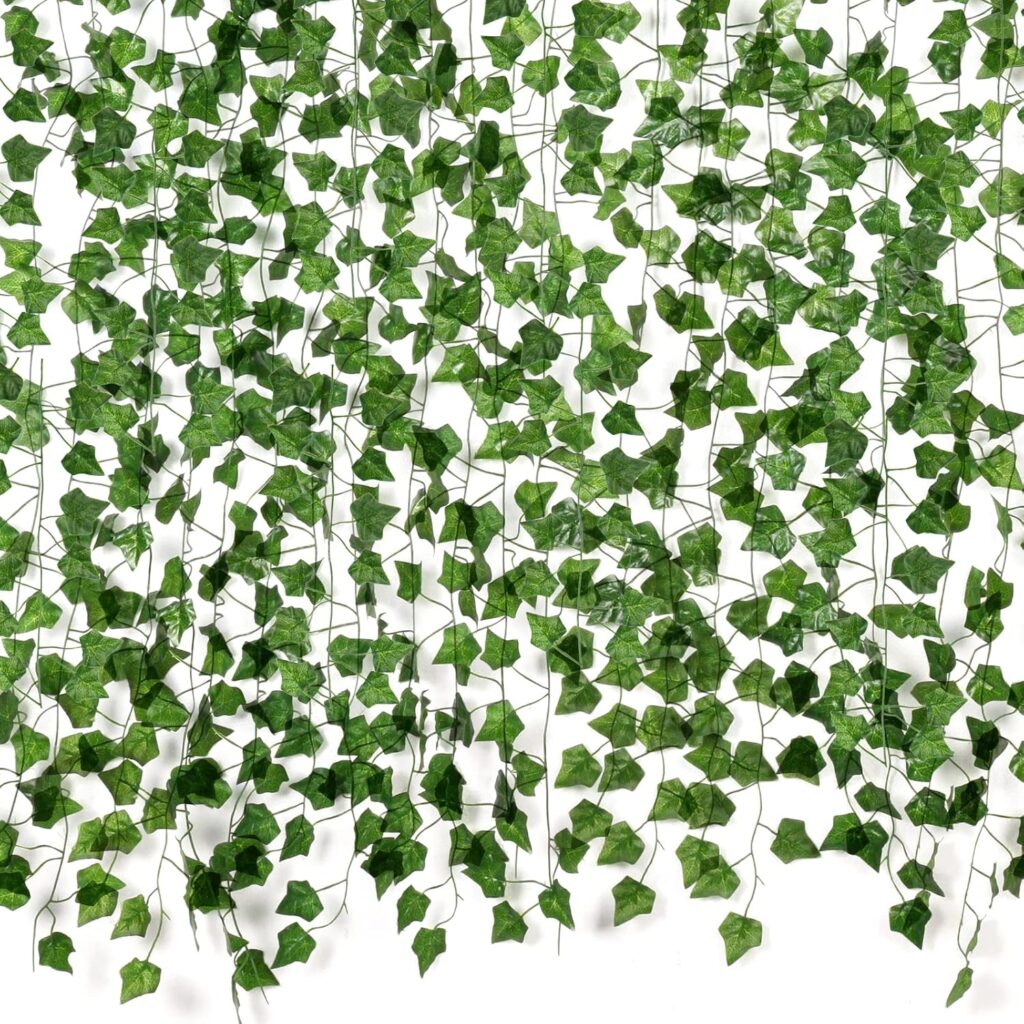
In the world of home décor, greenery plays a magical role. A touch of nature—whether real or faux—can breathe life into any space, soften architectural lines, and create a calming, organic ambiance. But what if you love the look of lush, trailing plants but don’t have the time, space, or green thumb to maintain real ones? This is where artificial hanging greenery garlands come in.
Take for example this product: a hanging artificial greenery garland vine (from your Amazon link). It’s versatile, low-maintenance, and can be used in many creative DIY decor projects. In this blog article, we’ll explore how you can use such artificial garlands for home decor ideas, why they make sense, how to style them, and how to maintain them — all backed by practical advice and real design principles.
BUY ON AMAZON : DIY Home Decor Ideas
Why Choose Artificial Hanging Greenery for DIY Home Decor?
Before diving into decor ideas, it’s worth understanding why artificial greenery is a smart choice. There are several benefits:
- Low Maintenance
Faux garlands don’t need watering, pruning, or sunlight. You can get the green, lush look without the constant upkeep. - Longevity
Unlike real plants that may wither or drop leaves, quality artificial vines can last for years if cared for properly. This makes them a one-time or occasional investment rather than an ongoing cost. - Versatility
Artificial garlands come in many styles, lengths, and materials (plastic, silk, polyester), allowing you to choose based on where and how you want to place them. - Allergy-Friendly
For people allergic to pollen, faux greenery offers the visual benefits of real plants without triggering allergies. - Design Freedom
Since they are not alive, you can drape, bend, cut, or shape them however you want. They’re great for creative DIY projects. - Year-Round Decor
Artificial vines don’t go “seasonal” — they stay green even during winters or in rooms with little sunlight. - Cost-Effectiveness
While the upfront cost may seem more than a cheap plant, in the long run, you save on plant replacements, fertilizers, soil, etc.

Understanding Design Principles: Why Greenery Works So Well
To make the most of artificial garlands in your home, it’s useful to know some design or architectural principles that justify the use of greenery: DIY Home Decor Ideas
- Biophilic Design: This concept is all about integrating nature into built environments. Biophilic design has documented benefits for mental health — reducing stress, improving productivity, and making spaces more pleasant.
- Texture and Layering: Draping vines adds visual texture and depth. They act as organic lines that guide the eye, soften rigid geometry, and can visually connect different design elements.
- Focal Points: Greenery can turn otherwise dull architectural elements — pillars, beams, door frames, mantels — into focal or accent points.
- Vertical Balance: In many interiors, the upper portion of walls or ceilings remains underutilized. Hanging vines help bring balance by drawing the eye upward and creating a sense of fullness.
Creative DIY Decor Ideas with Hanging Artificial Greenery
Here are 10+ creative, practical, and stylish DIY decor ideas using artificial hanging garlands or vines (including suggestions using the kind of product in your URL):
- Ceiling “Hanging Garden” / Floating Green Canopy
- Concept: Suspend several strands of artificial vines from the ceiling to simulate a floating canopy or hanging garden.
- Execution: Use ceiling hooks (adhesive or screwed, depending on ceiling) at staggered heights. Hang garland strands of different lengths to create layers. You can also add fairy lights intertwined with the vines to create a dreamy effect.
- Impact: This gives a boho, whimsical, or even romantic feel, especially in bedrooms, reading nooks, or cafes (if you have a commercial space).
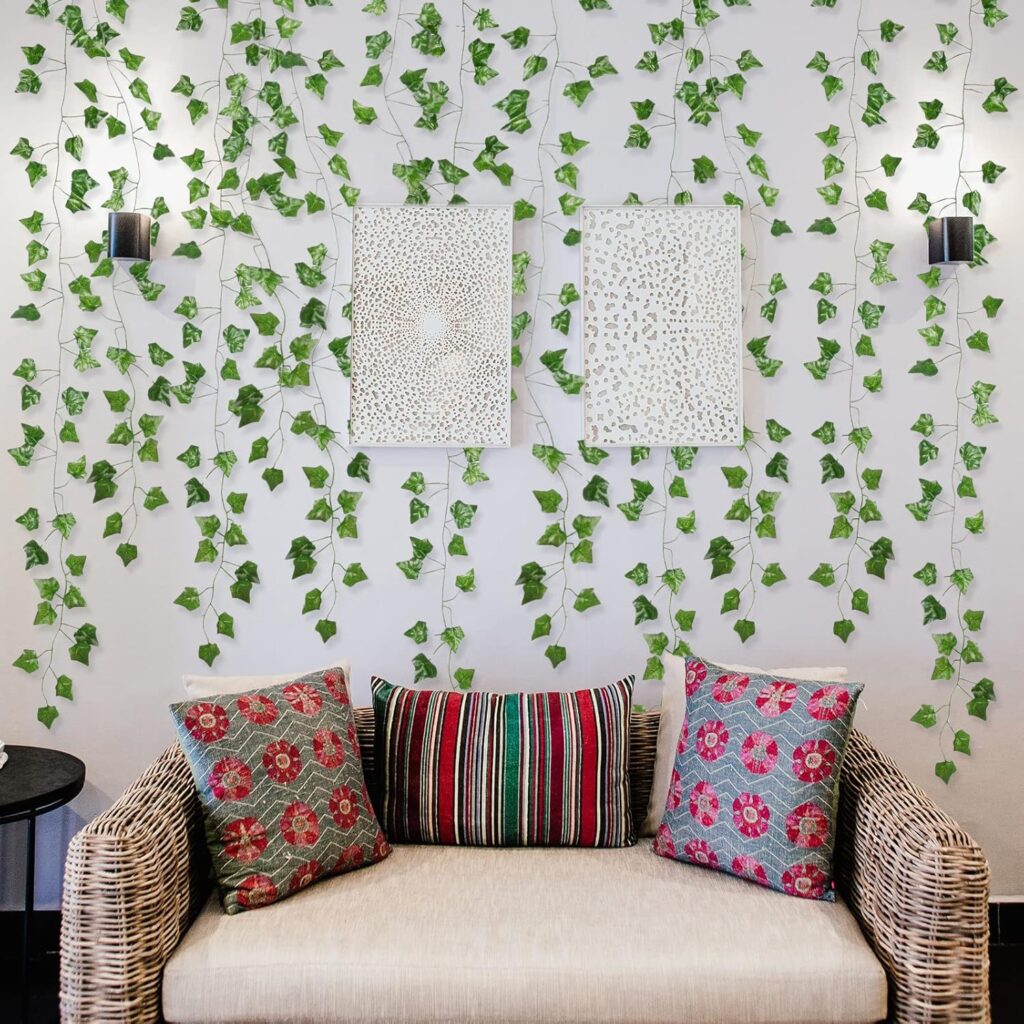
- Greenery Accent Wall / Vertical Garden
- Concept: Use vines to transform a blank wall into a lush, textured backdrop.
- Execution: Fix a grid, trellis, or wire mesh on the wall (or use removable wall hooks). Attach the artificial vine garlands to the grid, overlapping them to fill gaps and create fullness. You can also mix different types of vines (ivy, eucalyptus, willow) for variety.
- Impact: Works great for focal walls in living rooms or as a photo wall. It adds a “living wall” feel without the effort of real plants.
- Frame Mirrors, Windows, or Art
- Concept: Use garlands to frame or border mirrors, windows, or wall art with organic lines.
- Execution: Wrap or drape vine strands around the edges of a mirror or window using small hooks or clips. For art, you can let the garland frame it loosely without hiding the artwork.
- Impact: Softens hard lines, adds natural elegance, and makes the framed object feel integrated with nature.
- Bookshelf or Mantel Styling
- Concept: Instead of cluttered bookshelves, add greenery to bring flow and softness.
- Execution: Let the vine garland cascade down from the top shelf or loop it around decorative objects. You could also mix in small faux potted plants or decorative items to create an organic, styled look.
- Impact: Makes shelving feel less static and more curated, bringing a relaxed, lived-in charm.
- Wrap Around Architectural Features
- Concept: Use vines to accent columns, beams, railings, stair banisters, etc.
- Execution: Wrap the garland around the feature. For railings or banisters, weave the vine through or around and secure at intervals.
- Impact: Highlights architectural features in a natural way, making structural elements part of your decor.
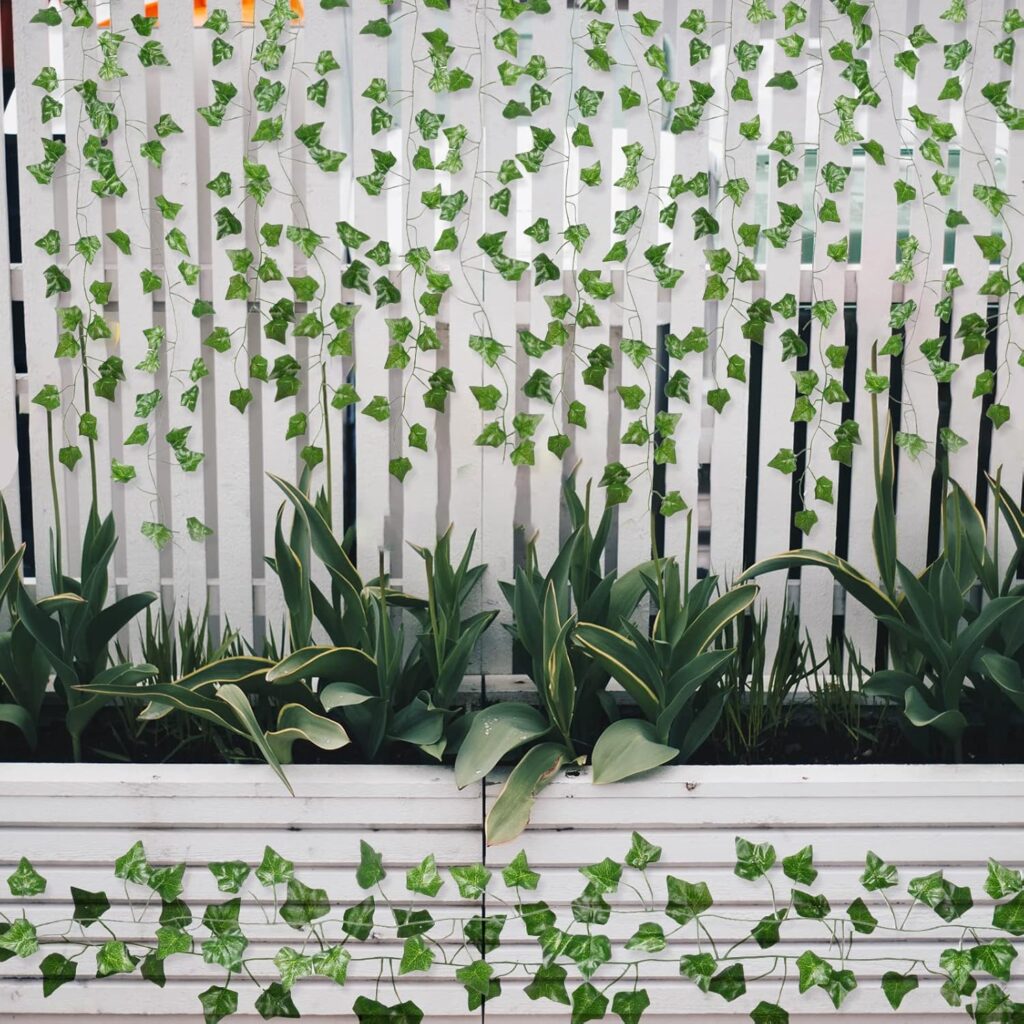
- Natural Room Divider with Vine Curtains
- Concept: Use trailing vines to create a soft partition in open-plan spaces.
- Execution: Hang rods or wires from ceiling to floor, then hang multiple strands of garland as “curtains” of greenery.
- Impact: Helps separate zones (e.g., living area and dining area) without obstructing light or making the space feel closed off.
- Table Runners and Centerpieces
- Concept: Use garlands as part of table decor — either as a runner or entwined centerpiece.
- Execution: Lay a garland down the middle of the table, weave in LED candles or tealights, and maybe throw in some flowers or decorative objects.
- Impact: Adds elegance and a lush, organic touch to dining tables, event setups, or even everyday meals.
- Seasonal Wreaths & Holiday Decor
- Concept: Use vine garlands to create seasonal decor pieces.
- Execution: Twist vine strands into hoops or wreath shapes. Add seasonal accents — flowers for spring, pinecones & berries for winter, dried citrus for fall.
- Impact: Reusable, customizable, and cost-effective seasonal decor that looks professional.
- Front Door & Entrance Decor
- Concept: Make your entrance more welcoming by using garlands around the doorway.
- Execution: Drape or wrap garland around the door frame. You could also pair it with a wreath or lights for added effect.
- Impact: Creates an inviting, green, warm welcome for guests.
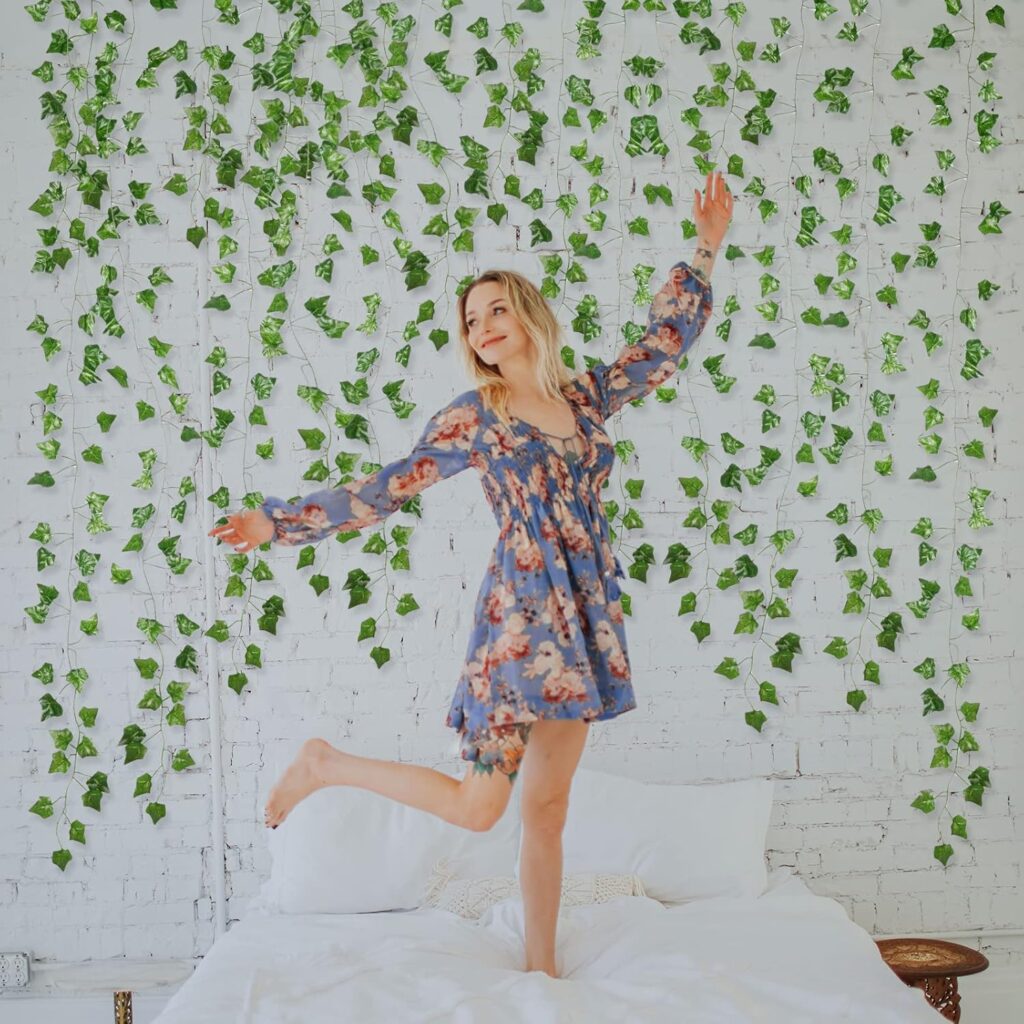
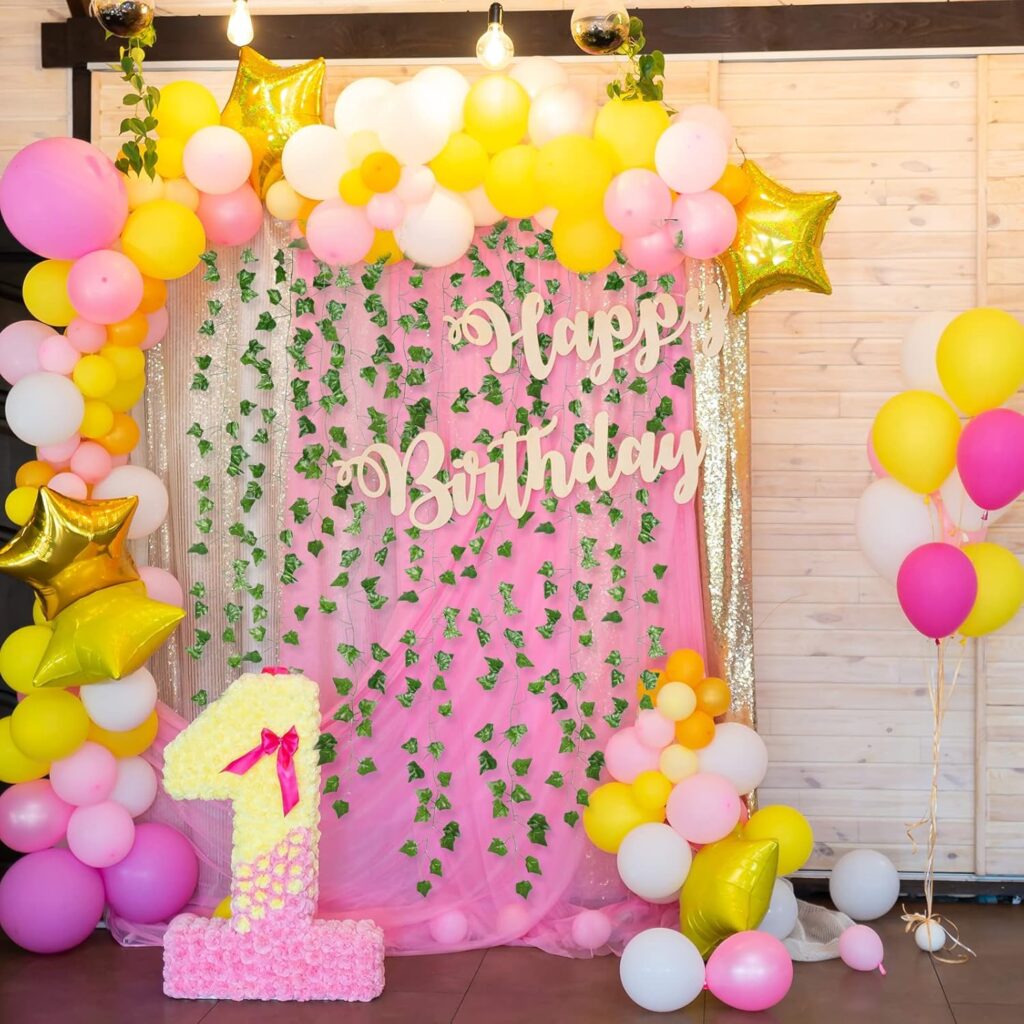
- Backdrops for Events / Parties
- Concept: Use artificial vines to make a dreamy, photo-worthy backdrop for weddings, parties, or even home events.
- Execution: Create a grid or frame, then drape garlands across. Add lights, flowers, or decorative props. The vines can be shaped and bent to get just the right fullness.
- Impact: Makes a visually stunning and cohesive setting without the unpredictability of real plants.
- Bathroom & Kitchen Refresh
- Concept: Use greenery in spaces where real plants struggle (low light, humidity).
- Execution: Drape faux vines around mirrors, hang them over shower rods, or weave them around cabinets. Artificial vines are great for humid places, as real plants often don’t thrive there.
- Impact: Creates a spa-like, refreshing environment that feels organic but is super easy to maintain.
- Lighting Accents
- Concept: Combine artificial vines with fairy lights or string lights.
- Execution: Weave LED string lights through the vine strands. You can also use vine garlands that come with built-in lights.
- Impact: Adds a gentle, warm glow and makes the greenery pop at night.
How to Choose the Right Artificial Garland (for DIY Projects)
When picking an artificial hanging greenery garland (like the product in your link), here are key factors to consider so that your DIY decor looks great and is practical to work with:
- Material Quality
- Look for garlands made from good-quality plastic, silk, or polyester. Higher-quality materials tend to look more real and are more durable.
- UV resistance is a plus if you plan to use them near windows or outdoors.
- Length & Thickness
- Measure the space where you plan to use it (wall, ceiling, table).
- If you need fullness, choose garlands with a dense bunch of leaves or multiple vines twisted together.
- Color
- Opt for a natural-looking green rather than very glossy neon green, unless that’s your aesthetic.
- Some garlands have mixed-leaf shades, which look more realistic; others are monochrome.
- Flexibility
- Choose garlands with bendable stems so you can shape them, wrap them, or curve them as needed.
- If you plan to cut them, check if the wires inside are sturdy but not too rigid.
- Maintenance Needs
- Even though they are artificial, they will gather dust. Go for materials that can be cleaned (wiped or washed) easily.
- Also consider storage: vines that can be coiled or hung without damage are preferable.
- Safety
- If you have kids or pets, check whether the materials are non-toxic.
- Make sure when you hang them, they are securely fastened so they don’t fall.
- Price vs Value
- Balance cost with quality. Very cheap vines may look plastic-y and may not last, while very expensive ones may be overkill unless you’re doing a high-end decor.
- Consider how often you’ll use them: for a frequently used DIY, invest a bit more.
Caring for Your Artificial Garland
Even artificial decor needs some maintenance if you want it to look its best. Here are realistic and practical tips:
- Regular Dusting
Use a feather duster, soft cloth, or vacuum with a brush attachment to gently remove dust. - Deep Cleaning
- If garlands are very dusty or dirty (especially if used outdoors), wash them gently with warm soapy water. Rinse and allow to dry fully before rehanging.
- Do not use very harsh chemicals; they may degrade the material or color.
- Storage
- When not in use, store them in a way that they don’t get crushed. Hanging them or laying them flat (but loosely coiled) works well.
- Avoid tight folding, which may damage leaves or make the vine permanently bent.
- Inspection & Repair
- Over time, some leaves or parts might get loose. Use floral wire or glue (non-toxic) to reattach.
- If you trimmed or cut the vine, seal the cut ends (if needed) so they don’t fray or look messy.
Highlight
Let’s talk specifically about the artificial hanging greenery garland vine from your Amazon link (though you didn’t provide a direct name, I’ll refer to it conceptually):
- This kind of garland is ideal for DIY decor because its hanging design gives you flexibility to drape, wrap, or suspend.
- Since it’s artificial, it is well-suited for places where live plants might struggle (e.g., low light, no watering convenience).
- You can combine it with decor ideas mentioned above: ceiling installation, wall accent, framing, or lighting integration.
- For a garland of this type, always check its length, leaf density, and how realistic the leaves look when you buy. These characteristics largely determine how good it will look after you style it.
Mistakes to Avoid in DIY Decor with Faux Vines
When working with artificial garlands, people often make some common mistakes. Here are pitfalls and how to avoid them:
- Overcrowding / Too Much Greenery
- Mistake: Using so many vines that the space looks artificial, overdone, or cluttered.
- Solution: Use just enough to highlight or accent, not to cover everything. Leave negative space so the greenery doesn’t overwhelm.
- Poor Quality Garlands
- Mistake: Buying cheap, very plastic-looking vines that look fake and cheap.
- Solution: Invest in decent quality ones — even moderate-quality garlands look good and last longer.
- Wrong Fastening
- Mistake: Using weak hooks or tape that doesn’t support the vine or leads it to sag.
- Solution: Use proper wall hooks, ceiling hooks, or wire grids depending on where you’re placing the garland.
- Ignoring Sunlight / Fading
- Mistake: Placing garlands near windows in direct sunlight, where poor-quality ones can fade.
- Solution: Choose UV-resistant vines or place them in slightly sheltered areas. Also, deep clean periodically to prevent discoloration.
- Neglecting Cleaning
- Mistake: Letting dust accumulate, which makes the greenery look dull.
- Solution: Set a routine (monthly/biweekly) to dust and clean gently.
- Bad Storage
- Mistake: Folding or crumpling vines during storage, causing permanent bends or damage.
- Solution: Coil them loosely or hang them when storing.
- Ignoring Safety
- Mistake: Hanging vines from unstable hooks or in places where they might fall.
- Solution: Always use secure fasteners; if hanging from the ceiling, make sure the hook or anchor is strong and properly installed.
Combining Artificial Greenery with Other DIY Elements
To elevate your decor even more, you can combine the garland with other DIY elements. Here are some hybrid ideas:
- Garland + Fairy Lights: Weave in string lights (LED) for a soft, ambient glow.
- Garland + Flowers: Add artificial flowers (roses, baby’s breath, etc.) to the garland to create seasonally themed pieces or a more romantic look.
- Garland + Beads / Tassels: For a boho or eclectic vibe, add tassels or wooden beads to strands of the garland.
- Garland + Macramé: Use macramé hangers or wall hangings, and wrap garland around or through them to combine texture.
- Garland + Mirrors / Frames: As explained earlier, use vines to frame things for a natural, elegant finish.
Real-Life Use Cases & Examples
Let’s explore some realistic scenarios where you might use artificial hanging greenery garlands in your home, with DIY design ideas for each.
- Living Room Makeover
- Use a garland to frame a large mirror or art piece above a sofa.
- Create a “floating garden” effect by suspending garlands from the ceiling above a reading nook or coffee table.
- Style a mantel (if you have one) by draping vine garland with candles and decorative items for a cozy, layered look.
- Bedroom Ambiance
- Hang vines around the headboard or from the ceiling to make a dreamy, canopy-like setup.
- Combine vines with string lights for soft night-time mood lighting.
- Use a vine curtain (as room divider) to separate a small workspace or dressing area.
- Entryway / Hallway
- Wrap the vine around the entrance doorway to welcome guests with greenery.
- Use a vertical garden wall in a hallway to bring in color and soften plain walls.
- Dining Space
- Use the garland as a table runner. Weave in LED candles, small decor items, or seasonal accents for dinner parties.
- Make a hanging centerpiece above your dining table: suspend garland with lights from the ceiling and hang decorative pendants or flowers.
- Balcony / Patio
- Wrap garlands around railings or along the edge of a pergola.
- Use them to create a green backdrop or divider in your balcony garden.
- Combine with weather-resistant lights for a cozy evening outdoor vibe.
- Event / Party Decor
- Build a photo wall or backdrop using a frame + vine garland + flowers.
- Use garlands to decorate arches, tables, and chairs.
- Make reusable DIY wreaths, garlands, and centerpieces for birthdays, weddings, or festive events.
- Bathroom Refresh
- Drape vines around mirrors or hang lightly from ceiling corners to make your bathroom feel spa-like.
- Pair with fake ferns or eucalyptus garlands to evoke natural calm without worrying about humidity.
Sustainability and Budget Considerations
While artificial plants might seem “less green” than real ones, there are sustainability and budget aspects to consider:
- Reusable Decor: Because these garlands last for years, you reduce waste compared to buying seasonal real plants or flowers for decor.
- Energy Use: No need for electricity or water (unlike for many living plants), so their maintenance drain is low.
- Cost Efficiency: As mentioned before, though the upfront cost might be more than a cheap plant, long-term value is high.
- Material Impact: Choose garlands made of quality materials — better-made faux plants will last longer and reduce the need for replacement.
- Disposal: When they do wear out, check if parts (like wires) can be recycled. Avoid cheap, brittle garlands that break down into microplastics.
Potential Drawbacks & Honest Trade-Offs
To be fully transparent, artificial hanging greenery is not a magic solution — there are some trade-offs:
- Lack of Real Plant Benefits: Real plants purify air, absorb CO₂, and contribute to biodiversity. Fake ones don’t do that in the same way.
- Dust Accumulation: Over time, artificial leaves gather dust, and cleaning can take effort.
- Realism Limit: Some garlands may still look “fake” if not high quality, especially under close inspection or strong light.
- Environmental Cost: Production of synthetic plants involves plastics and potentially non-biodegradable materials, so sustainability depends on how long you use them.
- Initial Cost: Good-quality artificial vines are more expensive than some cheap decorative items; the value comes from reuse and longevity.
Step-by-Step DIY Project: Creating a Hanging Green Canopy
To pull all this together, here’s a step-by-step DIY project example: a hanging green canopy over a bed or a cozy corner.
Materials Needed:
- Several strands of artificial hanging greenery garland (depending on area size)
- Ceiling hooks (or adhesive hooks rated for weight)
- Thin transparent fishing line or strong thread
- (Optional) LED fairy lights
- Scissors
- Measuring tape
Steps:
- Measure Your Area
- Use measuring tape to find the width and depth of the area where you want the canopy.
- Decide how far the vines should hang down.
- Install Hooks
- Mark ceiling points where hooks will go. For better coverage, use 3–5 hooks in a semi-grid or circular pattern.
- Screw in or apply hooks (depending on your ceiling type). Make sure they are secure.
- Prepare the Garlands
- Cut/adjust the garland strands if needed. Make sure each strand ends at roughly the height you want (or leave extra for natural drape).
- If using lights, wrap them around or integrate them into the vine strands before hanging.
- Hang the Garlands
- Tie one end of the garland to the hook using fishing line or thread.
- Let the other end hang freely for a cascading effect, or tie it to another point for a denser canopy.
- Shape & Adjust
- Once all garlands are hung, adjust them — bend stems, rotate leaves — to create a full, natural look.
- If using lights, plug them in and distribute them evenly across the vines.
- Final Touches
- Tuck extra garland into corners for fullness.
- Optionally, add light-weight decor (like small fake flowers) for more visual interest.
- Maintenance
- Dust weekly.
- Occasionally detach and clean deeper if needed.
Conclusion
Artificial hanging greenery garlands — like the one in your Amazon product link — are a versatile, practical, and beautiful tool in the DIY home décor arsenal. They provide the visual richness of natural plants without the regular maintenance. By applying design principles, choosing the right materials, and deploying creative styling strategies, you can transform virtually any space: ceilings, walls, tables, doorways, and more.
Whether you want a floating green canopy, an accent wall, a romantic dining display, or a cozy reading nook, these vines can help you do it elegantly and economically. With a bit of planning, some hooks, and creative flair, your artificial garland can elevate your home’s look and feel in a big way.
BUY ON AMAZON : DIY Home Decor Ideas
Frequently Asked Questions
How can artificial greenery improve my DIY home decor ideas?
Artificial greenery adds freshness, color, and texture to your space, making your DIY home decor ideas look more stylish and complete. It’s affordable, long-lasting, and perfect for beginners.
Are artificial hanging vines good for small-space DIY home decor ideas?
Yes! Hanging vines and garlands work extremely well in small rooms because they utilize vertical space. They make small-space DIY home decor ideas look elegant without crowding the room.
Can artificial greenery be used outdoors for DIY home decor ideas?
You can use artificial greenery outdoors if the product is UV-resistant or meant for outdoor use. This helps extend the life of your DIY home decor ideas on balconies, patios, or entryways.
What is the best way to maintain artificial greenery for DIY home decor ideas?
To maintain it, simply dust the leaves weekly and occasionally wipe them with a damp cloth. Low maintenance like this makes artificial greenery perfect for DIY home decor ideas that last all year.
What are some easy DIY home decor ideas using artificial hanging greenery?
Popular DIY home decor ideas include creating greenery walls, decorating shelves, framing mirrors, enhancing photo corners, styling headboards, and adding vines around windows or curtain rods.