
Buy On Amazon : Flower Candle Warmer Lamp with Timer
The Science of Scent Without Flame: How Candle Warmer Lamps Work
Candle warmer lamps represent a significant technological evolution in home fragrance, fundamentally altering the way we release aromatic compounds into our living spaces. At their core, these devices are electric appliances designed to melt scented candle wax without utilizing an open flame. This simple yet profound shift in methodology addresses many of the inherent risks and inefficiencies associated with traditional candle burning. The central mechanism involves a controlled heat source, most commonly a specialized halogen bulb, which gently warms the surface of a jar candle, causing the wax to liquefy and release its fragrance into the air. This process is known as “top-down” melting, where heat is applied directly to the top layer of wax, allowing it to melt and diffuse its scent gradually and consistently. This contrasts sharply with the combustion-based method of traditional candles, where a wick is lit, creating a flame that burns the wax from the bottom up, forming a melt pool that rises toward the surface.
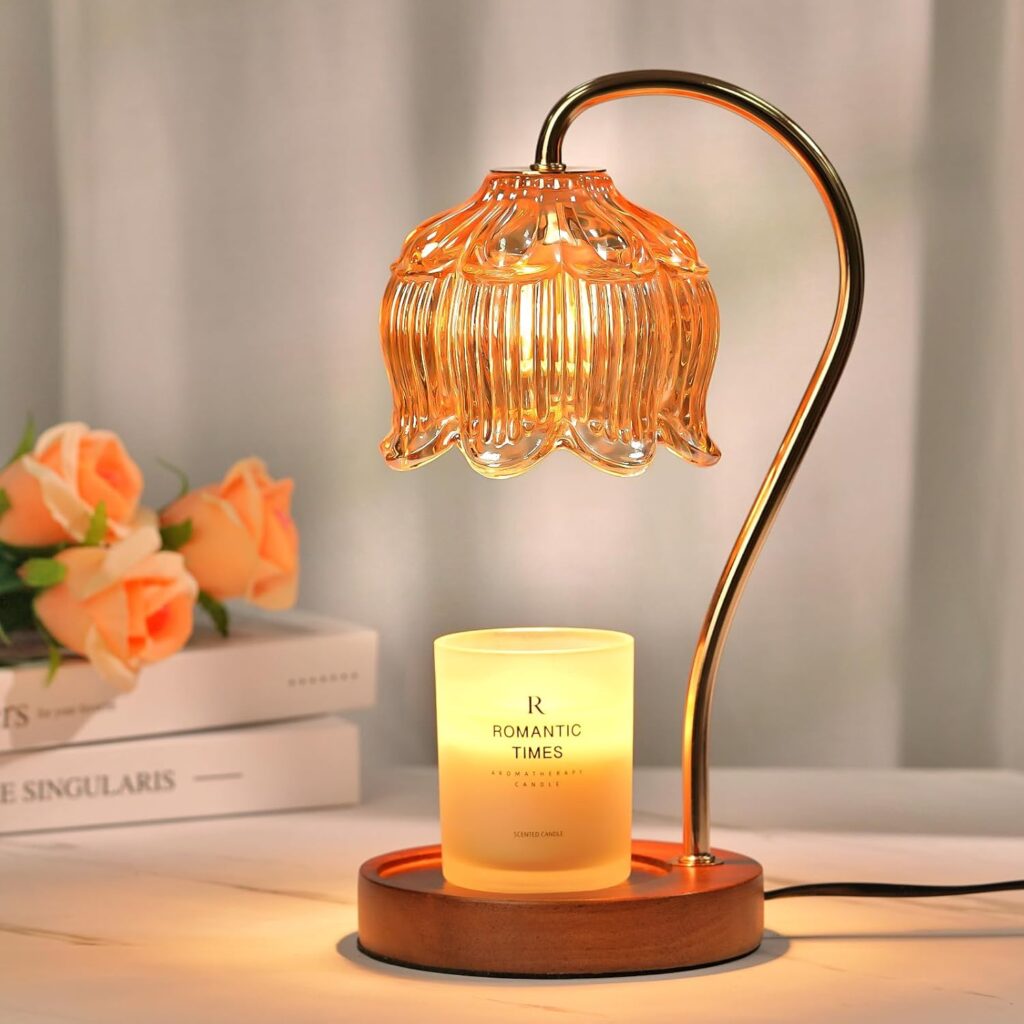
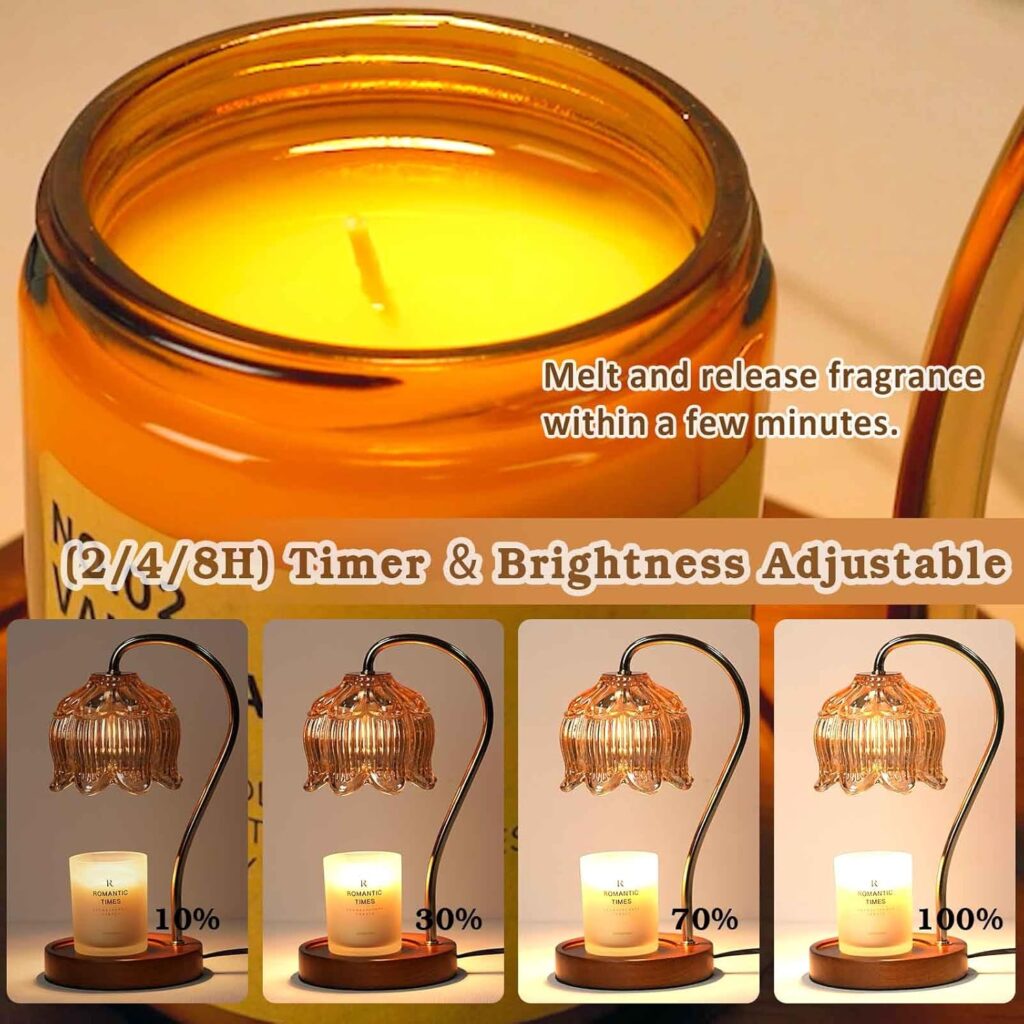
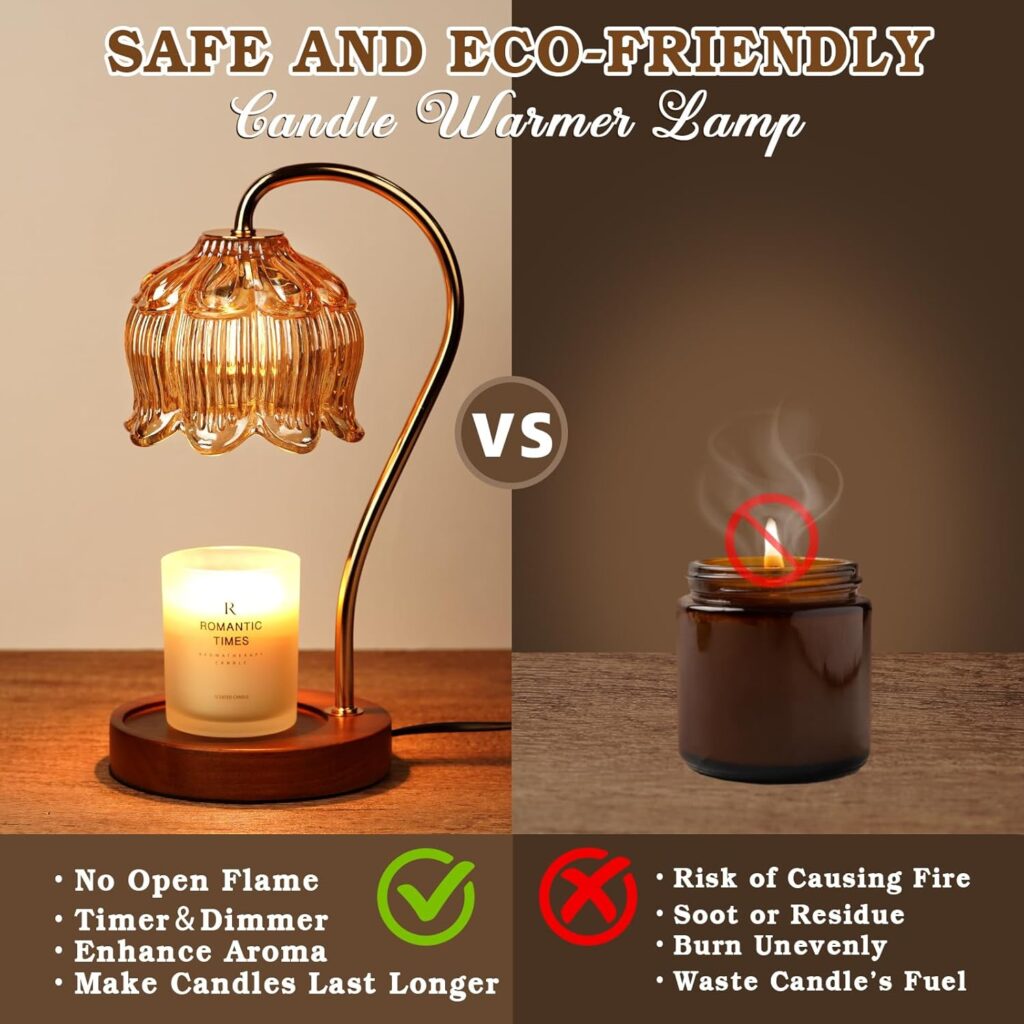
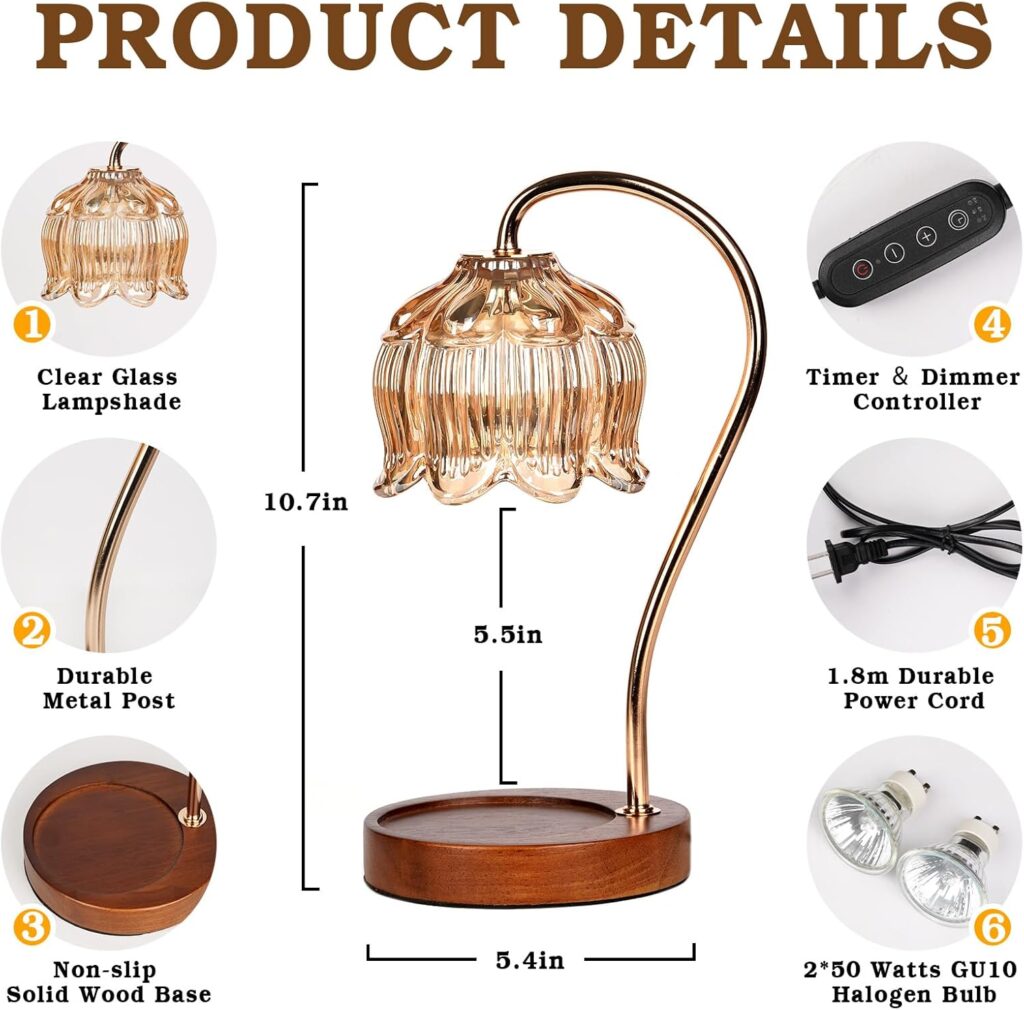
The choice of heat source is critical to the functionality and performance of a candle warmer lamp. While various designs exist, the most prevalent type utilizes a GU10 halogen bulb positioned above the candle jar. Halogen bulbs are favored for several reasons. They generate high temperatures quickly, enabling the wax to begin melting within just five to ten minutes of activation. Their ability to produce a tight, focused beam of light and heat is particularly advantageous; this concentrated heat allows for more efficient energy transfer to the candle, melting the wax faster and more effectively than a wider-beam bulb would. This targeted heating is crucial for achieving a full melt pool across the entire surface of the wax, which maximizes scent dispersion. Some models offer different wattage options, typically ranging from 15 watts to as high as 50 watts, which directly correlates with the intensity of the heat produced. The brightness of the bulb is often directly linked to the heat output; higher brightness settings increase the temperature, accelerating the melting process and producing a stronger scent, while lower settings result in slower melting and a more subtle aroma. Many modern units feature dimmable controls, either through a rotary dial or button-based system, which allow the user to fine-tune the light intensity and, consequently, the fragrance diffusion rate to suit their environment and preference. It is imperative to use the correct type of bulb specified by the manufacturer, as improper bulbs can lead to poor performance, such as ineffective melting, or even pose a safety hazard like overheating. For instance, LED bulbs are generally not suitable for this purpose because they lack the necessary thermal output to melt wax effectively, despite being more energy-efficient.
The resulting scent profile from a warmed candle differs significantly from that of a traditionally burned one, a distinction rooted in the principles of chemistry and temperature. When a candle is lit, the flame reaches extremely high temperatures, typically between 1,000°F and 1,400°F (approximately 538°C to 760°C). This intense heat instantly vaporizes all the volatile fragrance molecules present in the wax, releasing them into the air at once. This rapid release can sometimes overwhelm the senses or alter the complexity of the scent, stripping away some of the more delicate notes. In contrast, candle warmers operate at a much gentler temperature, usually between 120°F and 160°F (approximately 49°C to 71°C). This lower, sustained heat allows for a selective evaporation of the fragrance oils. The lighter, more volatile molecules are released first, followed by deeper, heavier notes over time. This creates a “softer,” more nuanced, and layered scent experience that unfolds gradually rather than hitting the room with an immediate burst. One head-to-head test conducted by Taste of Home editors demonstrated this difference starkly: after one hour, a traditionally burned candle lost 4 grams of wax, whereas a warmed candle lost only 1 gram. This illustrates that warming is a far more gradual and controlled process for both wax consumption and fragrance diffusion. Consequently, while a freshly lit candle might have a stronger initial scent throw, a warmed candle provides a longer-lasting and more consistent aroma over time.
Beyond fragrance diffusion, the light emitted by the halogen bulb serves another important function: ambiance. The glowing bulb provides a soft, warm, and flicker-free light that mimics the comforting glow of a real candle flame, adding a decorative element to the space. This makes the lamp itself a piece of decor, especially in models with attractive shades or bases made of materials like ceramic, wood, or metal. However, it is crucial to recognize that this light is artificial and lacks the dynamic, organic flicker of a true flame, which some users find to be an integral part of the candle-burning ritual. Furthermore, while the absence of an open flame eliminates smoke and soot, recent scientific research has introduced a new consideration regarding indoor air quality. A 2025 study by the American Chemical Society found that warming terpene-rich wax melts can still generate ultrafine particles and secondary organic aerosols. This research led to the conclusion that “flame-free does not mean pollution-free,” suggesting that while warmers are a significant improvement over burning candles, they do not entirely eliminate all forms of indoor air pollutants. This nuanced finding highlights the importance of ventilation when using any form of scented product indoors. Despite this, candle warmers remain a vastly superior option for improving indoor air quality compared to traditional candles, as they completely eliminate the production of soot and particulate matter that results from combustion. The overall mechanism, therefore, is a carefully balanced system of controlled heat application that prioritizes safety, efficiency, and a refined sensory experience, making it a compelling alternative for modern consumers.
| FEATURE COMPARISON | CANDLE WARMER LAMP | TRADITONAL CANDLE |
| Heat Source | Electric halogen bulb (typically 25-50W) | Open flame from a wick |
| Melting Method | Top-down melting from the surface of the wax | Bottom-up melting, forming a central melt pool |
| Operating Temperature | Low and controlled (120°F – 160°F / ~49°C – 71°C) | Very high (1,000°F – 1,400°F / ~538°C – 760°C) |
| Scent Profile | Gradual, layered, and softer release of fragrance notes | Immediate, powerful, and simultaneous release of all fragrance compounds |
| Ambiance | Soft, warm, flicker-free glow from the bulb | Dynamic, flickering flame with crackling sounds (from wooden wicks) |
| Byproducts | No smoke, no soot, minimal VOCs (though terpenes can still react) | Smoke, soot (particulate matter), and VOCs from combustion |
| Wax Consumption | Extremely slow; extends candle life by melting wax, not burning it | Faster; consumes both wax and the wick itself |
| Primary Benefit | Enhanced safety, cleaner air, extended candle life, controllable scent | Ritualistic experience, strong initial scent, natural ambiance |
This detailed comparison underscores the paradigm shift that candle warmer lamps introduce. They are not merely a substitute but a fundamentally different approach to enjoying candlelight and fragrance. By replacing the unpredictable and hazardous nature of an open flame with precise, controllable electric heat, they offer a solution that aligns with contemporary values of safety, sustainability, and health-conscious living. The technology behind them—centered on the efficient and focused heat of a halogen bulb—enables a new kind of sensory experience that is safer, cleaner, and more economical in the long run. Understanding this science is the first step in appreciating why candle warmer lamps have become such a popular and valuable addition to modern homes.
The Unmatched Value Proposition: Deconstructing the Benefits
The decision to invest in a candle warmer lamp is driven by a powerful and multifaceted value proposition that addresses the most common frustrations and dangers associated with traditional candle burning. These benefits can be broadly categorized into four key areas: enhanced safety, remarkable efficiency, improved indoor air quality, and customizable ambiance. Each of these pillars reinforces the others, creating a compelling case for adoption that extends beyond mere convenience to encompass health, cost-effectiveness, and peace of mind.
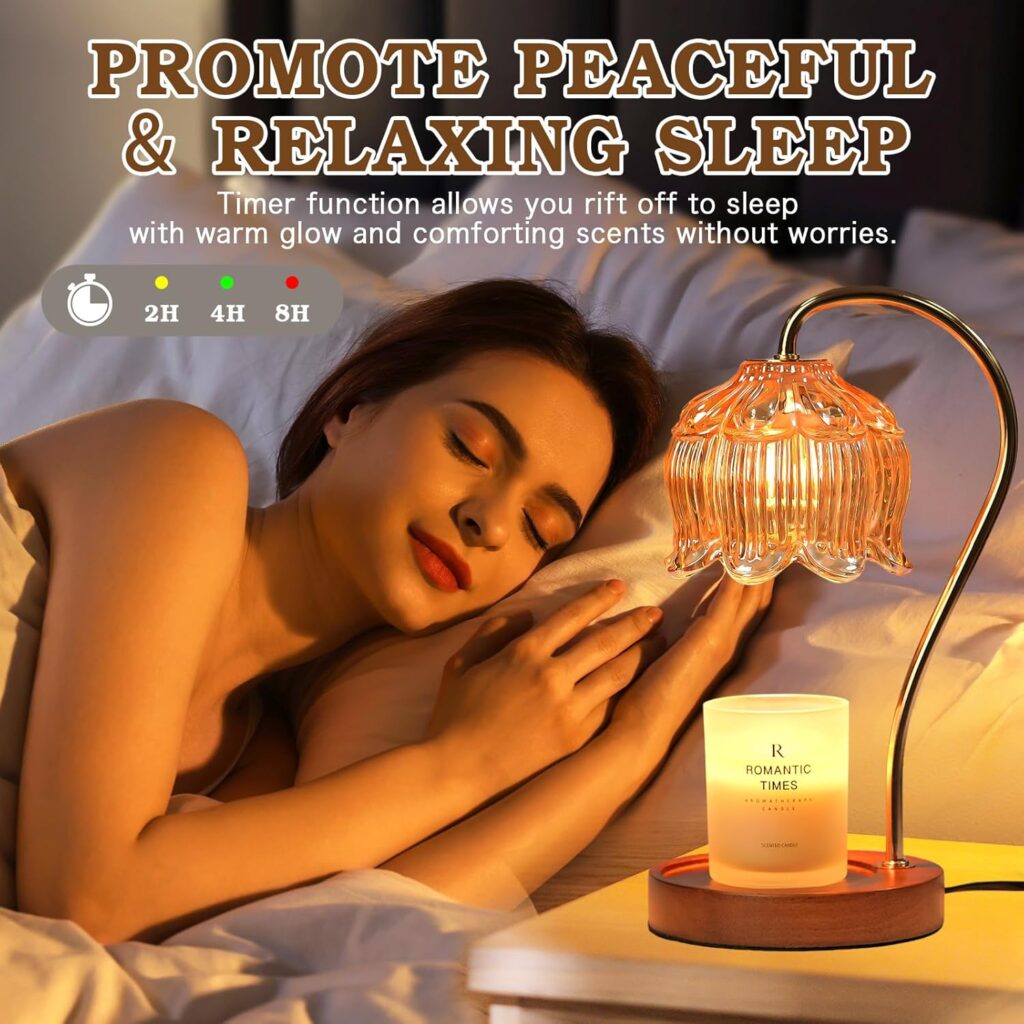
The foremost benefit, and arguably the most significant selling point, is the dramatic enhancement of safety. Traditional candles, by their very nature, involve an open flame, which introduces a constant risk of accidental fires. According to data from the National Fire Protection Association (NFPA), candles were responsible for 4% of all home fires reported between 2018 and 2022, leading to substantial property damage and injuries. These fires are often caused by unattended candles or those placed too close to flammable materials. Candle warmer lamps completely eliminate this risk by removing the open flame altogether. This makes them an exceptionally safe choice for households with children, pets, or elderly individuals who may be curious about or unable to handle a flame safely. The device operates as a closed system, containing the heat source within a protective base or structure, minimizing the chance of accidental tipping or contact with combustible items. While the device itself becomes hot during operation, posing a burn risk if touched, and the melted wax is also hot, the absence of a continuous, exposed flame drastically reduces the probability of a catastrophic fire. This peace of mind is invaluable, especially in high-traffic areas, small apartments, dorm rooms, or offices where the risk of a candle being knocked over is heightened. Experts from organizations like the NFPA and local fire departments consistently recommend flameless alternatives for these environments. Furthermore, candle warmers eliminate the need to extinguish a candle with smoke, which can disrupt the intended fragrance and leave a lingering burnt smell, preserving the purity and consistency of the aroma throughout its lifespan.
A second major pillar of the value proposition is exceptional efficiency, manifesting in two ways: the preservation of expensive candles and the conservation of electricity. Traditional candle burning is inherently wasteful. The flame consumes not only the wax but also the wick itself, and the process is prone to tunneling, where a channel of unmelted wax remains along the sides of the container, rendering a significant portion of the candle unusable. Candle warmers circumvent this issue entirely. By melting the wax evenly from the top down, they ensure that almost every last drop of wax is utilized to release its fragrance. This prevents tunneling and allows the candle to re-solidify in a smooth, flat layer after each use, ready to be warmed again. The effect on candle longevity is profound. Multiple sources estimate that a single candle used in a warmer can last anywhere from two to five times longer than the same candle burned conventionally. One user reported not having purchased new candles for over a year, having used her original luxury candles extensively with a warmer. Another head-to-head test showed a warmed candle losing only 1 gram of wax in three hours, while a burned one lost 4 grams in just one hour, highlighting the dramatically slower consumption rate. This extended lifespan translates directly into long-term cost savings. Although the initial purchase price of a candle warmer ranges from $16 to over $50, this upfront investment is recouped over time as users get far more use out of their existing candle collection.
In terms of energy consumption, candle warmers are remarkably efficient. Most operate on low-wattage bulbs, typically in the 15 to 40-watt range, which is comparable to a standard household light bulb. An average residential electricity cost in the U.S. of around $0.14 per kWh means that running a typical 20-watt warmer for six hours a day could cost approximately $0.50 per month. Even a larger 40-watt Scentsy warmer, used continuously for 24 hours, would only cost about $0.22 per day. This minimal power draw makes them a cost-effective and environmentally friendly way to fragrance a home compared to other electric air fresheners or diffusers that may consume significantly more power. Their energy efficiency stems from their targeted heating method; unlike an open flame that emits heat in all directions, a candle warmer directs its energy precisely onto the candle, minimizing waste.
The third critical benefit is the marked improvement in indoor air quality. Combustion, the process of burning a candle, produces two primary pollutants: soot and volatile organic compounds (VOCs). Soot, composed of tiny carbon particles, is a visible byproduct that can discolor walls, ceilings, curtains, and furniture, requiring frequent cleaning. More importantly, inhaling soot can negatively impact respiratory health. Candle warmers eliminate the production of soot and smoke entirely, leading to visibly cleaner surfaces and better indoor air. This makes them a preferable option for individuals with allergies or sensitivities to smoke and particulate matter. However, it is essential to acknowledge the nuance revealed by recent scientific studies. As previously mentioned, a 2025 American Chemical Society study indicated that warming certain types of wax melts, particularly those rich in terpenes, can still generate ultrafine particles and secondary organic aerosols. Researchers concluded that “flame-free does not mean pollution-free.” While this finding reframes the benefit from absolute purity to relative improvement, it is still a significant upgrade over the pollutants generated by combustion. To mitigate any potential concerns, experts recommend maintaining good ventilation in the room, such as opening a window or using an air purifier, when using any scented product.
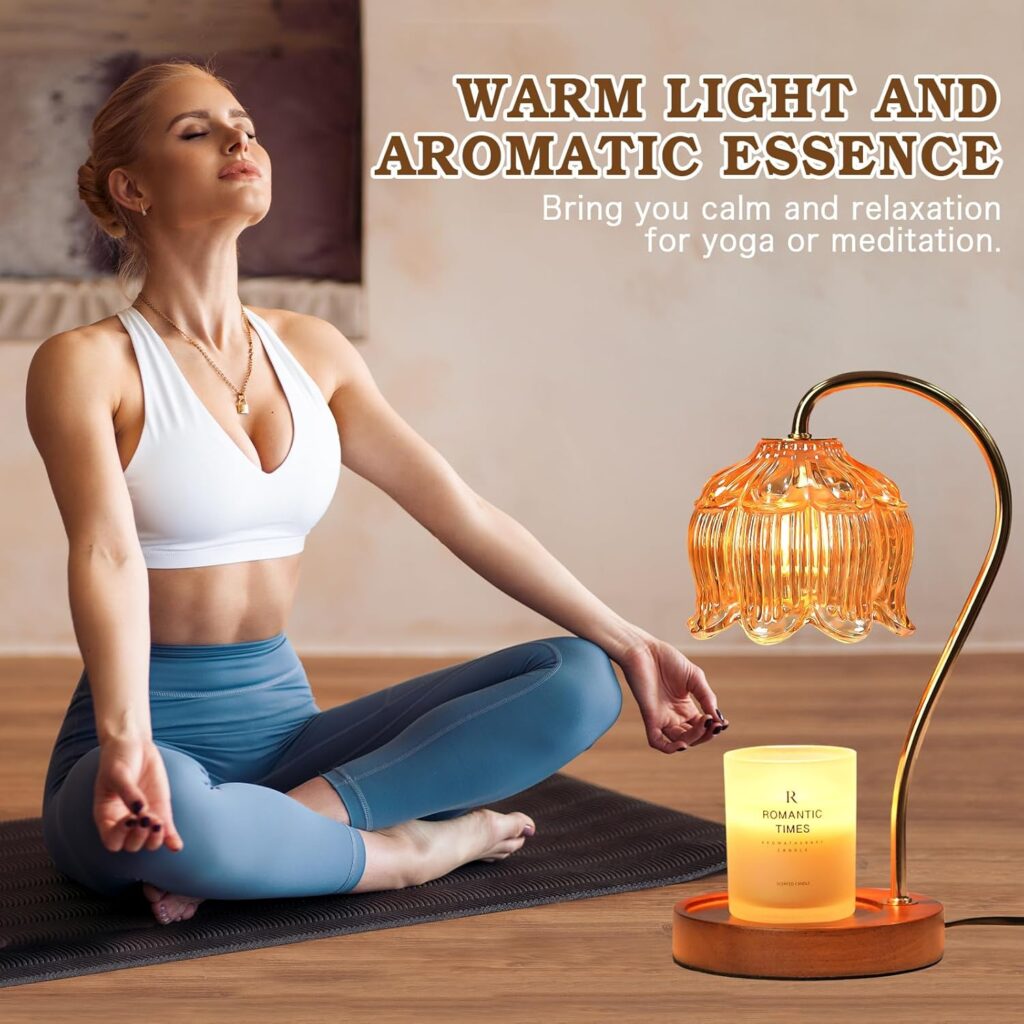
Finally, candle warmer lamps offer a unique and customizable ambiance that enhances a space aesthetically. The soft, warm glow emitted by the halogen bulb creates a cozy and inviting atmosphere, providing a flame-like visual appeal without the fire hazard. This ambient lighting is a functional feature that complements the fragrance diffusion. The dimmable controls found on many models add another layer of customization, allowing users to adjust the brightness of the light and, by extension, the heat intensity. This enables users to tailor the mood to their needs: a bright setting for a lively gathering or a subdued setting for relaxation. The design of the lamps themselves has evolved to be a piece of decor. Manufacturers offer a wide array of styles, from sleek minimalist and modern geometric shapes to rustic lanterns, vintage-inspired fixtures, and ornate metallic sculptures. These devices are constructed from materials like polished ceramic, brushed metal, distressed wood, and frosted glass, allowing them to seamlessly integrate into virtually any interior design aesthetic, from Japandi and Scandinavian to farmhouse and bohemian. In essence, a candle warmer lamp is a dual-purpose object: it is a functional appliance for fragrance diffusion and a decorative accent that contributes positively to the overall ambiance of a room. Together, these four pillars—safety, efficiency, air quality, and style—form a robust and compelling value proposition that makes the candle warmer lamp a transformative and intelligent choice for modern fragrance enthusiasts.
Navigating the Market: Choosing the Perfect Warmer for Your Home
The market for candle warmer lamps is diverse and expansive, offering a wide spectrum of products that cater to various budgets, aesthetic preferences, and functional needs. With numerous brands and models available on platforms like Amazon, navigating this landscape requires a clear understanding of the key differentiators, from design and build quality to essential safety features and operational capabilities. The ideal choice will depend on a user’s specific priorities, whether they are seeking the most affordable option, a statement piece of home decor, or a device packed with advanced safety and convenience features. Fortunately, expert analysis and consumer testing reveal that while aesthetics vary widely, core performance metrics are often standardized across brands, simplifying the selection process.
Price points for candle warmer lamps span a broad range, making them accessible to a wide audience. At the entry-level, budget-friendly options can be found for as little as $16 to $25. Popular models in this category, frequently reviewed on Amazon, include the Yarra-Decor Dimmable Candle Warmer Lamp, Godonlif Candle Warmer Lamp, Soilsiu Candle Warmer Lamp, and Briever Candle Warmer Lamp. These models often provide excellent basic functionality, featuring dimmable lights and built-in timers, delivering a solid user experience without a high price tag. Mid-range options, typically priced between $30 and $60, offer more sophisticated designs and premium materials. Brands like Luzdiosa, Threshold, and Grandis are frequently highlighted by reviewers for their stylish construction and reliable performance. For example, the Luzdiosa Candle Warmer Lamp is praised for its minimalist design and effective performance, while the Threshold model stands out for its elegant marbled base. Higher-end models, often found on specialty sites like Etsy or offered by luxury candle brands, can command prices upwards of $100. These may feature custom-made lampshades, unique finishes, or are bundled with high-end candles, positioning them as designer accessories. Despite these price differences, an interesting insight from expert testers is that many candle warmer lamps, particularly from lesser-known manufacturers, utilize identical 50W GU10 halogen bulbs. This suggests that the fundamental heating performance and effectiveness are often similar across the board, meaning that a well-reviewed budget model can perform just as well as a more expensive one.
Aesthetics play a crucial role in the selection process, as these devices are intended to be visible elements within a living space. Modern candle warmer lamps are designed to be both functional and decorative, capable of complementing a wide variety of interior styles. For those with a taste for modern minimalism, options with clean lines, neutral colors like white, black, or gray, and materials such as concrete, wood, or ceramic are popular choices. The Sparoom Candle Lamp Warmer, with its crescent-moon-shaped gold arm and wooden base, exemplifies a design-forward aesthetic. For a more classic or rustic feel, models with distressed wood finishes, wrought iron accents, or vintage-inspired lantern designs are available. The Googie Candle Warmer Lamp, with its retro-futuristic steel stand, and the Geezo Candle Warmer Lamp, with its vintage floral design, cater to these tastes. Ceramic warmers, like those from Candle Warmers Etc., are particularly popular for their hand-crafted, artisanal appearance, often featuring unique glaze variations that make each piece one-of-a-kind. The choice of material also influences the overall look and feel; metal warmers offer a sleek, industrial vibe, while glass and ceramic provide a softer, more organic touch. Ultimately, the lamp should be selected based on how well it harmonizes with the existing decor of the intended space, serving as a cohesive and pleasing addition to the room.
Beyond aesthetics, several key features are critical for ensuring optimal performance, safety, and user convenience. Among the most important is the presence of a timer. Built-in timers, which automatically shut off the device after a set period (commonly 2, 4, 6, 8, or 10 hours), are a vital safety feature that mitigates the risk of prolonged, unattended operation. This helps prevent overheating of the device or the candle, conserves energy, and ensures the warmer does not remain on overnight. Another essential feature is a dimmer switch, which allows the user to control the brightness of the bulb and, consequently, the amount of heat applied to the candle. This control is crucial for managing the intensity of the fragrance, allowing for a subtle background aroma or a stronger scent throw depending on the occasion and room size. Adjustable height is another significant functional advantage. Lamps with adjustable arms or heads enable the user to position the bulb closer to the candle for faster, more intense melting, or farther away for a gentler, more sustained warming process. This flexibility is particularly useful for accommodating candles of different sizes and for optimizing heat transfer for maximum fragrance release. Finally, and non-negotiable from a safety perspective, is the presence of recognized safety certifications. Look for products that are UL (Underwriters Laboratories) or ETL (Electrical Testing Laboratories) listed. These marks indicate that the product has been tested by a Nationally Recognized Testing Laboratory (NRTL) and meets established safety standards, providing assurance against electrical hazards. Many reputable brands, including Candle Warmers Etc., prominently display these certifications on their products.
The table below provides a comparative overview of several popular candle warmer lamp models discussed in the provided sources, highlighting their key features and specifications to aid in the selection process.
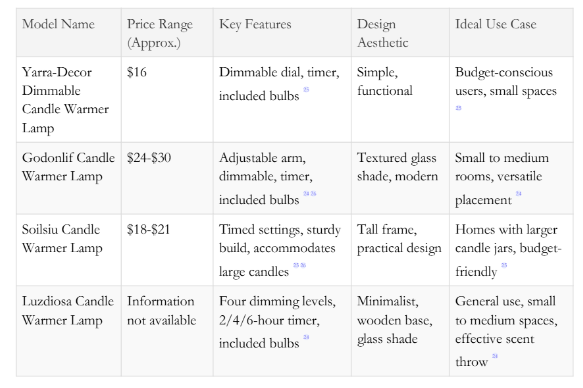
Ultimately, the perfect candle warmer lamp is one that balances personal style with practical functionality and unwavering safety. For most users, a mid-range model from a reputable brand that offers a combination of a dimmer, a timer, and adjustable height will provide the best overall experience. Prioritizing safety certifications like UL or ETL is paramount, regardless of price or design. By considering these factors, a consumer can confidently select a device that not only enhances their home’s ambiance but also provides a safer, more efficient, and longer-lasting way to enjoy their favorite fragrances.
Optimal Performance: Best Practices for Placement and Usage
Achieving the best possible fragrance experience from a candle warmer lamp requires more than simply placing a candle on the device and turning it on. Optimizing performance involves strategic placement, selecting the appropriate candle, and employing best practices for operation to ensure consistent scent throw, maximize candle longevity, and maintain the efficiency of the warmer itself. By understanding the interplay between the device, the candle, and the environment, users can unlock the full potential of their investment and avoid common pitfalls that can diminish the quality of the aroma or reduce the lifespan of their candles.
The location of the candle warmer lamp is one of the most critical factors influencing its effectiveness. Airflow plays a significant role in how fragrance disperses throughout a room. Placing the warmer in an open area with good circulation will help project the scent more effectively than situating it in a stuffy, enclosed corner or a humid space. Positioning the lamp on a side table, bookshelf, or console table can elevate it slightly and improve airflow. However, it is equally important to avoid placing the warmer in a drafty area. Direct drafts from windows, doors, or vents can cause the flame-like glow of the bulb to flicker and can lead to uneven melting of the wax, potentially compromising the integrity of the candle. The ideal spot is one that is centrally located in the room, free from obstructions like walls or heavy furniture, and on a stable, flat, and heat-resistant surface. Never place the warmer on an unstable surface, near flammable materials, or where it could be easily knocked over by children or pets. Ensuring the base is level is also crucial for preventing the candle from tipping or the wax from spilling.
Proper candle selection and preparation are equally important. Candle warmer lamps are primarily designed for use with standard jar candles that have a flat top and a relatively shallow surface. Most models can accommodate candles with diameters ranging from 3 to 5 inches, but it is essential to check the manufacturer’s specifications to ensure compatibility. Candles that are too large may block the heat from the bulb, preventing effective melting, while candles that are too small may not absorb enough heat to create a full melt pool. It is generally recommended to avoid candles with metal wicks or irregular shapes, as these can interfere with the heating process. Paraffin wax candles should also be used with caution, as some types may melt improperly or create a mess. Opting for candles made from natural waxes like soy or coconut soy is often recommended for cleaner diffusion and better performance in warmers. Before placing a candle on the warmer, it is advisable to trim the wick to 1/4 inch, as this practice helps reduce soot and ensures a steady, even melt pool, even though the wick is not actually burning. Allowing the candle to cool completely before handling the wax is also a critical safety practice.
Effective usage involves a thoughtful approach to operating the warmer’s controls, particularly the dimmer and timer functions. When starting the warming process, it is often beneficial to set the dimmer to the highest setting for the first 20 to 30 minutes. This higher heat helps to rapidly melt the top layer of wax and initiate a full melt pool across the surface. Once the wax is fully melted, the dimmer should be turned down to a lower setting. Operating the warmer on a lower heat setting for the remainder of the session is crucial for several reasons. First, it preserves the fragrance. High heat settings, while providing a strong initial scent, tend to degrade the quality of the fragrance over time and can lead to premature “burnout” of the wax. Using the lowest setting that still maintains a full melt pool is the most efficient way to prolong the scent’s life. Second, lower heat minimizes wax consumption, extending the life of the candle even further. Third, it reduces energy usage and prevents the device from overheating. Many tests have shown that adjustable warmers perform better at lower temperatures, producing a more sustainable and pleasant aroma. The timer function should always be used to limit the duration of each warming session. It is recommended not to leave the warmer on for more than 4 to 5 hours at a time. After the timer shuts off, the candle should be allowed to cool completely before the warming cycle is started again. This cooling period is essential for the wax to re-solidify evenly and for the fragrance to settle back into the wax, preparing it for the next use. Continuous, uninterrupted operation increases the risk of overheating the electrical components and can cause the wax to become excessively degraded.
Maintaining the cleanliness of the warmer is also a key component of optimal performance. Over time, residue from the candle’s wax and fragrance can accumulate inside the lamp’s shade or on the base, which can impair the device’s heating efficiency and lead to cross-contamination of scents when switching fragrances. Regular cleaning, especially after every few uses or whenever the scent begins to fade, is necessary to keep the device functioning properly and to ensure that each new fragrance is experienced in its purest form. This proactive maintenance prevents the buildup of old wax that can mix with new wax, resulting in a muddy or unpleasant scent profile. Keeping the area around the bulb clean of dust is also important, as dust buildup can reduce heating efficiency and potentially pose a fire hazard if it comes into contact with the hot bulb. Following these best practices for placement, candle selection, operational techniques, and maintenance ensures that a candle warmer lamp will deliver a consistently strong, clean, and enjoyable fragrance experience while maximizing the life of both the device and the candles it holds.
The Essential Care Routine: Maintenance and Cleaning for Longevity
Regular maintenance and diligent cleaning are not optional extras for candle warmer lamps; they are essential practices for ensuring optimal performance, extending the lifespan of the device, and maintaining a pristine fragrance experience. Over time, as wax is melted and fragrances are released, residue can accumulate on the lamp’s internal surfaces, particularly inside the glass shade or on the base. This buildup can impede the device’s ability to heat efficiently, leading to inconsistent melting and weaker scent throw. Furthermore, leaving old, unscented wax in the device can contaminate new fragrances, resulting in a mixed and often unpleasant aroma. Therefore, establishing a consistent care routine is crucial for keeping the warmer in peak condition and preserving the integrity of your candle collection.
Knowing when to clean is the first step in this routine. There are several clear indicators that a cleaning is required. The most obvious sign is a noticeable decrease in the strength of the fragrance emission. If you find that your candle is no longer filling the room with its characteristic scent after a typical warming session, it is likely that the top layer of wax has lost its fragrance and needs to be removed. Another sign is the appearance of a white, powdery film on the surface of the wax, which indicates that the essential oils have evaporated. It is also recommended to clean the warmer after every 3 to 4 uses or whenever you decide to switch to a new fragrance to prevent scent mixing. For crock-style warmers, it is important to remove any remaining wax before inserting a new tart, as old wax can interfere with the melting process of the new one. For plate-style warmers, it is good practice to wipe the base with a dry cloth regularly to remove dust and debris that can collect between uses.
Before beginning any cleaning procedure, safety must be the top priority. Always unplug the device from the electrical outlet. Allow the warmer to cool completely until the wax has hardened and the surfaces are no longer hot to the touch. Attempting to clean a warm device poses a significant risk of burns and can also be dangerous if water or cleaning solutions come into contact with the electrical components. Working in a well-ventilated area is also advisable, especially if you are using cleaning agents like rubbing alcohol. It is critical to never submerge the electrical unit or any part that contains wiring into water. Only removable, detachable dishes or trays should be washed separately.
Once the device is safely cooled and unplugged, several effective methods can be used to remove the accumulated wax. The choice of method depends on the state of the wax (hardened or liquid) and the design of the warmer.
The Freezer Method is one of the most effective techniques for removing hardened wax from the dish or shade of a warmer. After the wax has cooled and solidified, place the dish in a freezer for approximately 10 to 15 minutes. The cold temperature causes the wax to contract and shrink, which loosens its grip on the surface. Once it has shrunk, you can easily pop the solidified wax out by gently pushing it from the bottom with your thumb or a plastic tool. Any stubborn remnants can then be wiped away with a damp cloth. This method is particularly useful for glass shades that are difficult to scrape without scratching.
For wax that is still warm but liquid, the Cotton Ball Method is a quick and easy solution. Place several cotton balls into the warm dish, allowing them to soak up the liquid wax. Use tweezers or tongs to carefully remove the wax-soaked cotton balls and dispose of them. This method is mess-free and avoids direct contact with the hot wax. However, it is important to use high-quality cotton balls, as lower-quality ones may leave fibers or lint behind in the wax, which can be a safety hazard.
If the wax has partially solidified, the Scraping Method is effective. Use a plastic scraper, a credit card, or a butter knife to gently scrape away as much of the solidified wax as possible. Be careful not to use metal tools, as they can scratch the surface of the warmer, especially if it is made of ceramic or glass, which can trap future wax residue. After scraping, you can wipe the dish with a cloth dampened with rubbing alcohol to dissolve any remaining residue and restore its shine.
After the bulk of the wax has been removed, a thorough cleaning with a mild cleaning agent can remove any final traces of residue. Dampen a soft, lint-free cloth with a mixture of warm water and a few drops of mild dish soap. Gently wipe the interior of the dish or the base of the warmer. Avoid spraying the cleaner directly onto the device; instead, apply it to the cloth first. For particularly stubborn stains or grime, rubbing alcohol is an excellent solvent for dissolving wax residue and sanitizing the surface. After washing, rinse the cloth with clean water and wipe the surface again to remove any soap residue, then dry thoroughly with a clean microfiber towel. White vinegar can also be used to remove wax residue by applying it undiluted to a cloth and buffing the surface.
Finally, proper disposal of the used wax is an important aspect of the maintenance routine. Used wax should never be poured down sinks, toilets, or drains, as it will solidify and cause severe plumbing blockages. Instead, wrap the hardened wax in paper or a disposable bag before disposing of it in the trash. Alternatively, if the wax is natural, like beeswax or soy, it can be composted after being broken into small pieces. By incorporating this simple yet vital care routine into your weekly or monthly schedule, you can ensure that your candle warmer lamp continues to perform flawlessly, providing a consistent and delightful fragrance experience for years to come.
Final Verdict: Is a Candle Warmer Lamp Worth the Investment?
After a comprehensive examination of the functionality, benefits, market offerings, and maintenance requirements of candle warmer lamps, the final verdict is unequivocally positive. Investing in a candle warmer lamp is not merely a purchase of a new gadget; it is a strategic upgrade to a safer, cleaner, more efficient, and more economical way of enjoying home fragrance. For anyone who appreciates the ambiance and aromas of candles but is concerned about the associated risks and waste, a candle warmer represents a logical and highly rewarding solution. The evidence overwhelmingly supports its value across multiple dimensions, making it a worthwhile investment for a wide range of consumers.
The primary justification for the purchase lies in the profound enhancement of safety. By eliminating the open flame, candle warmers address the single greatest danger posed by traditional candles—the risk of accidental fire. Given that candles contribute to thousands of home fires annually, this safety feature alone provides immense peace of mind, especially for families with children or pets, or in busy households and rental properties where fire codes may restrict open flames. This reduction in fire risk is the cornerstone of the product’s value proposition and a benefit that cannot be overstated.
Secondly, the economic and environmental benefits are substantial. The ability to extend the life of a single candle by up to five times is a game-changer for any avid candle user. This dramatic increase in longevity means that the initial cost of the warmer is quickly offset by the reduced frequency of purchasing new candles. This makes it a more cost-effective long-term solution. Furthermore, the elimination of wasted wax due to tunneling and the prevention of soot production contribute to a more sustainable lifestyle. The device itself is also highly energy-efficient, consuming a minimal amount of electricity, which keeps utility bills low.
Thirdly, the improvement in indoor air quality is a significant health-related benefit. The complete removal of soot and smoke emissions leads to a cleaner living environment, reducing allergens and preventing the staining of walls and fabrics that often accompany burning candles. While recent studies show that “flame-free does not mean pollution-free” in the context of all chemical reactions, the absence of particulate matter from combustion is a massive step forward for healthier indoor air. This makes candle warmers a more conscientious choice for households with members who have respiratory sensitivities.
While acknowledging the trade-off of losing the ritualistic and aesthetic experience of a flickering flame, the benefits of the candle warmer lamp far outweigh this loss for the majority of users. The gentle, consistent warmth, the customizable ambient light, and the nuanced, long-lasting scent profile offer a sophisticated and relaxing alternative that aligns perfectly with modern lifestyles. The availability of a vast array of stylish designs ensures that these functional devices can also serve as beautiful pieces of home decor, seamlessly integrating into any interior.
In conclusion, a candle warmer lamp is an intelligent, practical, and highly beneficial addition to any home. It successfully solves the primary problems associated with traditional candles—fire risk, mess, and waste—while enhancing the core experience of enjoying fragrance. It promotes safety, encourages frugality, improves air quality, and adds a touch of modern elegance. Whether you are a parent seeking a safer environment, a budget-conscious consumer looking to stretch your candle budget, or simply someone who values a clean and healthy home, the candle warmer lamp delivers on its promise. The decision to purchase one is a decision to embrace a smarter, safer, and more sustainable way of creating a welcoming atmosphere.
Buy On Amazon : Flower Candle Warmer Lamp with Timer
Frequently Asked Questions
1. Do candle warmer lamps really work better than burning candles?
Yes! Candle warmer lamps melt wax without a flame, releasing fragrance more slowly and evenly. This preserves scent oils longer, eliminates soot and smoke, and can make your candle last 2–5 times longer than traditional burning.
2. Are candle warmer lamps safe to leave on overnight?
It’s not recommended. While they’re much safer than open flames, the device and melted wax can still get very hot. Always use a model with an auto-shutoff timer (e.g., 4–8 hours) and never leave it unattended for extended periods or while sleeping.
3. What type of bulbs do candle warmer lamps use?
Most use a GU10 halogen bulb (typically 25W, 35W, or 50W). LED bulbs won’t work—they don’t generate enough heat. Always check your lamp’s manual for the correct bulb type and never exceed the recommended wattage.
4. Can I use any jar candle in a candle warmer lamp?
Most standard glass jar candles (3–4 inches in diameter) work well. Avoid candles in metal tins, extremely wide containers, or those with unusual shapes. Soy, coconut, or paraffin blend jar candles perform best—just ensure the top surface is flat for even melting.
5. How often should I clean my candle warmer lamp?
Clean it every 3–5 uses or whenever you switch scents. Old wax residue can trap stale fragrance and reduce performance. Use the freezer method to pop out hardened wax, then wipe with a cloth dampened with rubbing alcohol—never submerge the base in water.
Pingback: Best Fall Home Decor Ideas 2025 & Christmas Home Decor Styling Guide
Pingback: Best Candle Warmer Lamp 2025: Benefits, Safety, Features & Buying Guide