
Buy On Amazon : LitONES LED Desk Lamp (Model F-630)
Buy On Amazon : BenQ e-Reading LED Desk Lamp
Understanding the Modern Desk Lamp Revolution
The contemporary desk lamp has undergone a profound transformation, evolving from a simple device for illuminating a workspace into a sophisticated tool designed to enhance productivity, support visual health, and elevate interior aesthetics
. This revolution is primarily driven by advancements in Light Emitting Diode (LED) technology, which offers unprecedented energy efficiency, longevity, and versatility compared to older incandescent or fluorescent bulbs
. LEDs can last up to 50,000 hours, consume significantly less power, and provide a wide range of color temperatures, making them ideal for creating a healthy and adaptable work environment
. The modern market reflects this technological leap with a diverse array of products catering to every budget and need, from ultra-affordable clip-on lights to architecturally complex, ergonomically engineered fixtures priced in the thousands
. For instance, bestseller lists on platforms like Amazon showcase a vast spectrum of prices, with budget-friendly models like the Woputne ($9.99) and Giryuhd ($9.99) competing alongside high-end designer pieces like the Koncept Z-Bar Mini, which can cost over $300
- This diversity underscores a critical shift in consumer expectations: a desk lamp is no longer just a functional object but an integral component of a well-designed, ergonomic workstation
- A significant trend shaping the current landscape is the explicit focus on “eye-care” or “eye-caring” technology
- Manufacturers now prominently feature specifications that were once considered niche, such as high Color Rendering Index (CRI) values, flicker-free operation, and RG0 blue light safety ratings, as key selling points
- This move is a direct response to growing awareness among consumers and experts about the negative impacts of poor lighting, including digital eye strain, headaches, and reduced productivity
- As a result, many mid-range and premium lamps are marketed as solutions to these problems, offering adjustable brightness and color temperature to help regulate circadian rhythms throughout the day
- Another major driver of innovation is the integration of practical, value-added features that enhance convenience and reduce desk clutter. The inclusion of USB and USB-C charging ports has become a standard feature in many popular models, allowing users to charge phones, tablets, and other devices directly from the lamp base
- More advanced models are incorporating smart technology, such as ambient light sensors that automatically adjust brightness based on surrounding conditions, and even lamps that track local sunlight to mimic natural daylight cycles
- These features transform the desk lamp from a passive light source into an active participant in optimizing the user’s environment.
The materials used in construction also play a crucial role in defining a lamp’s character and performance. While lightweight plastics like ABS are common in budget-friendly models due to their low cost and ease of manufacturing
, higher-quality lamps increasingly utilize durable metals such as aluminum, steel, and iron
- Metal constructions not only convey a sense of premium quality and durability but also offer superior heat dissipation, which is critical for maintaining the long-term performance and lifespan of LED components
- For example, the LitONES F-630 is constructed from iron and aerospace-grade aluminum, contributing to its sturdiness and stability
- In contrast, some more affordable models may use plastic, which can feel less substantial and potentially degrade over time when exposed to oils from skin or improper cleaning agents
- Beyond functionality, the aesthetic design of a desk lamp has become a focal point, with brands like Koncept, Gantri, and Humanscale producing iconic designs that serve as both functional tools and decorative statements
- These designs often draw inspiration from mid-century modern classics, industrial architecture, or minimalist Scandinavian principles, offering consumers a way to personalize their workspace
- Ultimately, the modern desk lamp market is a dynamic and competitive space where consumers have access to a wealth of choices. The key to selecting the right one lies in understanding the interplay between technical specifications, ergonomic design, material quality, and the specific features that align with individual needs and budgets.
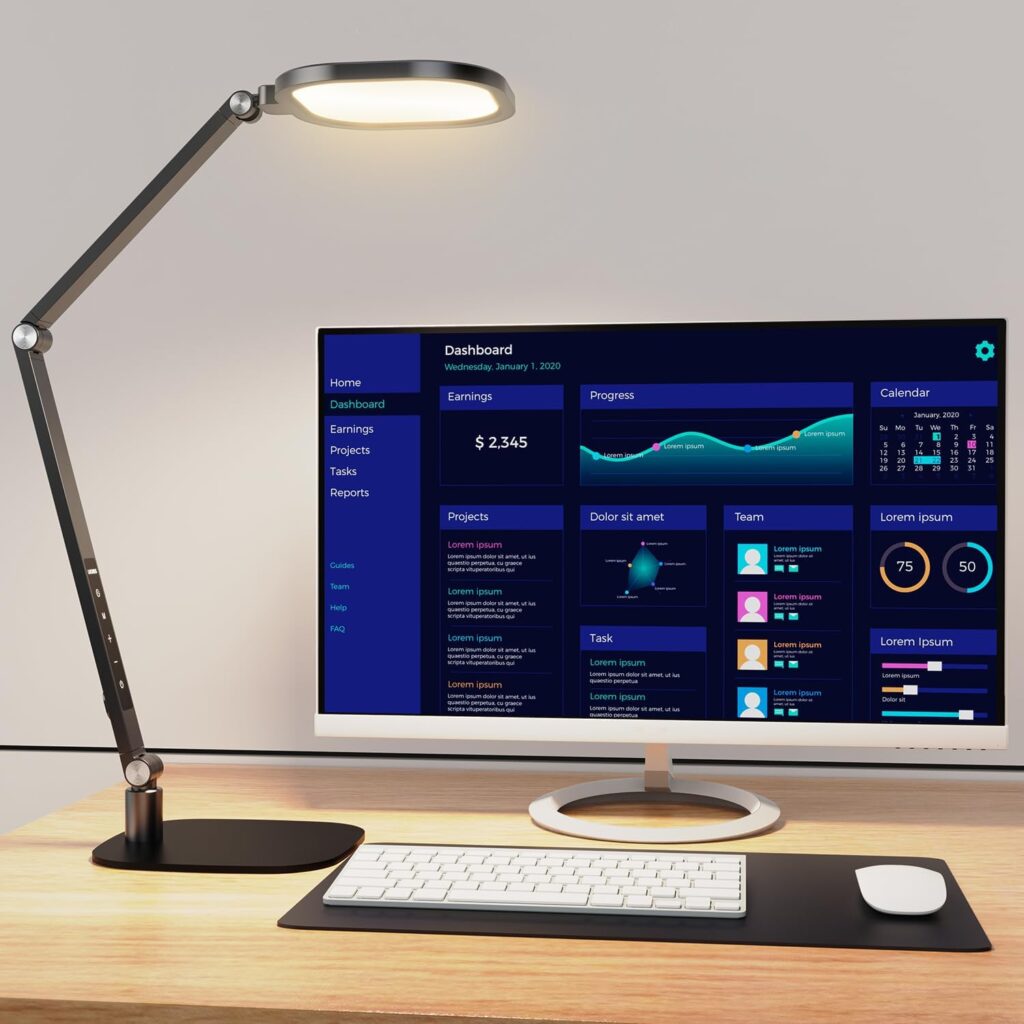
Key Technical Metrics and Ergonomic Features
Selecting the optimal desk lamp requires a nuanced understanding of its technical specifications and ergonomic capabilities. These two factors are intrinsically linked; a lamp may boast impressive specifications on paper, but without thoughtful ergonomic design, it fails to deliver on its promise of comfort and utility. The primary technical metric for measuring light output is the lumen. While lumens quantify the total amount of visible light emitted by a lamp, lux measures the intensity of that light as it falls upon a surface, providing a more direct indication of how well a lamp will illuminate a specific area like a desk
- For general office tasks, an illuminance level of 300–500 lux is recommended, while more demanding precision work may require up to 750 lux
- A good desk lamp should provide wide and evenly distributed illuminance through focused, asymmetrical lighting to minimize shadows and glare
- Equally critical is the Color Rendering Index (CRI), which indicates how accurately a light source reveals the colors of objects compared to natural light
- A CRI of 80+ is considered good for most indoor applications, while a score of 90+ is recommended for tasks requiring precise color identification, such as graphic design, painting, or sewing
- Many high-performance lamps, like the LitONES F-630 and Honeywell HWT-H01 Pro, advertise a CRI of ≥95, ensuring colors appear vibrant and true-to-life
- Another vital consideration is the lamp’s ability to mitigate common sources of eye strain. Flickering light, even if imperceptible to the naked eye, can cause headaches, migraines, and visual discomfort during prolonged exposure
- Consequently, “flicker-free” technology is a hallmark of quality desk lamps
- Similarly, short-wave blue light, part of the visible spectrum, can scatter easily and contribute to digital eye strain, potentially harming the retina with excessive exposure
- Lamps with an RG0 safety rating, such as the Honeywell HWT-H01 Pro, are certified to absorb high-energy blue light, making them safer for extended use, especially at night when it can disrupt sleep patterns
- The lamp’s physical design, or ergonomics, is paramount for effective and comfortable use. The most important feature is adjustability. An ideal task lamp should allow the user to precisely position the light source to avoid casting shadows on the work area, particularly for those who write or read, and to prevent direct glare on computer screens
- This is achieved through flexible arms, often featuring multiple pivot joints or ball-and-socket mechanisms that enable movement in multiple directions
- The Koncept Z-Bar Mini is celebrated for its award-winning three-bar design that provides exceptional reach and flexibility, while the Humanscale Nova utilizes patented ‘Forever Hinges’ to ensure the arm stays securely in place at any angle for decades
- The base of the lamp is another critical ergonomic element. A stable base prevents the lamp from tipping over, which could lead to damage or injury, especially when the arm is fully extended
- Bases come in two main forms: weighted and clamped. A heavy, weighted base provides inherent stability and allows the lamp to be placed anywhere on a desk, offering maximum portability
- However, for desks with limited surface area or for securing the lamp to a specific spot, a clamp mount is highly effective
- The choice between a weighted base and a clamp depends on the user’s desk layout and preference. For example, the LitONES F-630 is designed with a heavy iron base, eliminating the need for a clamp and making it suitable for various desk types
- Finally, practical features add significant value. Integrated USB charging ports are now commonplace, offering convenient power for mobile devices without cluttering outlets
- Some lamps include a timer function that automatically turns the light off after a set period, promoting energy savings and preventing accidental overnight use
- A memory function, which recalls the last-used brightness and color temperature settings, further enhances user experience by saving time and effort
- By carefully evaluating these technical and ergonomic attributes, consumers can move beyond superficial aesthetics and select a desk lamp that genuinely supports their health and productivity.
| FEATURE | IMPORTANCE | RECOMMENDED SPESIFICATION / TYPE |
| Brightness (Lumens) | Illuminates the work area effectively. | 450–1000 lumens for task work; 800–1200 lumens is a good target. |
| Illuminance (Lux) | Measures light intensity on a surface. | 300–500 lux for general tasks; up to 750 lux for detailed work. |
| Color Rendering Index (CRI) | Accuracy of color representation. | ≥90 for general use; ≥95 for color-sensitive tasks. |
| Color Temperature (CCT) | Warmth or coolness of light. | Adjustable range from 2700K (warm) to 6500K (cool). |
| Flicker-Free Operation | Prevents eye strain and headaches. | Look for certification or explicit mention of “flicker-free” technology. |
| Blue Light Hazard Rating | Reduces risk of retinal damage and sleep disruption. | RG0 rating is the safest classification. |
| Adjustability | Allows for precise positioning to avoid shadows/glare. | Multi-joint swing arm or gooseneck with multiple pivot points. |
| Base Stability | Prevents accidental tipping. | Heavy, weighted base for portability or a secure clamp for fixed placement. |
| USB Charging Ports | Conveniently charges devices, reducing cable clutter. | Dual ports (USB-A and USB-C) are ideal. |
| Memory Function | Saves user preferences for quick recall. | Recalls last brightness and color temperature settings. |
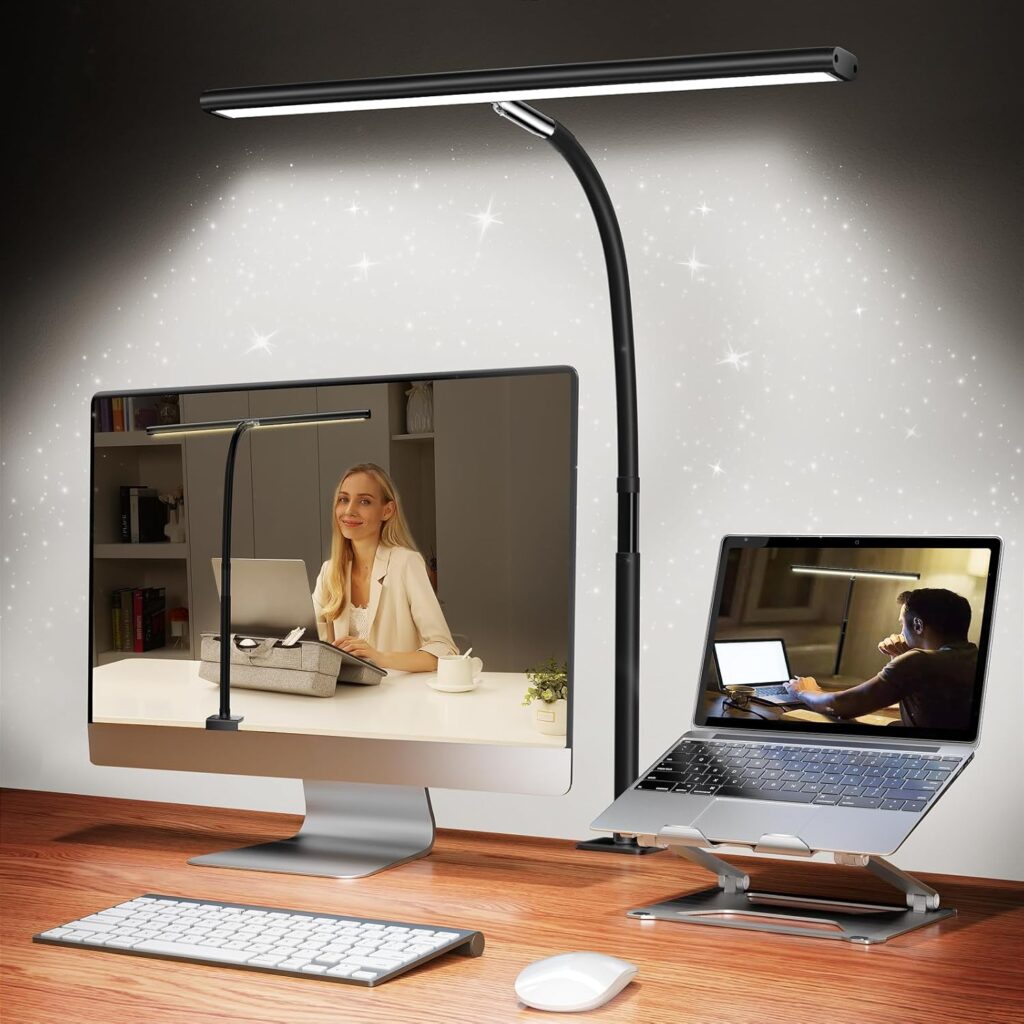
Comparative Review of Top Contenders: LitONES F-630 vs. Honeywell HWT-H01 Pro
In the crowded market of LED desk lamps, two standout contenders emerge for their exceptional balance of performance, features, and value: the LitONES LED Desk Lamp (Model F-630) and the Honeywell HWT-H01 Pro LED Desk Lamp. Each model caters to slightly different user needs, representing a compelling choice between a versatile, all-purpose workhorse and a highly efficient, space-saving specialist. The LitONES F-630 positions itself as a premium mid-tier option, combining robust technical specifications with a unique dual-functionality that appeals to a broad audience, including remote workers, students, and content creators
- Its core strength lies in its superior light quality and extreme flexibility. It boasts a high Color Rendering Index (CRI) of ≥95, ensuring that colors appear natural and accurate, which is invaluable for creative tasks and, critically, for achieving a flattering appearance on camera during video calls
- The lamp delivers a bright, glare-free light output ranging from 1200 lumens (a figure confirmed in recent listings
) to as high as 1600 lumens in some reports - This is complemented by a wide color temperature range from 3000K to 6500K, allowing users to switch between warm, relaxing light and cool, energizing light depending on the time of day or the task at hand
- Perhaps its most distinctive feature is its edge-lit LED technology, which produces soft, diffused illumination that minimizes harsh shadows and hotspots
- This same technology enables the lamp to function as an effective ring light when positioned correctly, making it a powerful tool for enhancing webcam video presence for Zoom meetings, live streaming, or podcasting
- From an ergonomic perspective, the LitONES F-630 excels with its five-pivot joint swing arm and a rotating head, granting extensive adjustability for precise light positioning
- A key design advantage is its construction as a free-standing model with a substantial 4.4-pound iron base, which provides excellent stability and eliminates the need for a clamp mount
- This makes it compatible with virtually any desk surface. The lamp also includes practical features like a touch control interface, a memory function that remembers the last-used settings, and a timer to turn the light off automatically
- Customer reception has been overwhelmingly positive, with consistently high ratings of 4.8 out of 5 stars across numerous sources, reflecting strong satisfaction with its build quality, performance, and versatility
- Users praise its sturdiness, flexibility, and the fact that it functions seamlessly as both a traditional desk lamp and a professional-grade ring light
- The manufacturer reinforces this value proposition with a generous warranty policy, offering a 3-year warranty plus lifetime service, and extending to a 5-year warranty on some versions, which builds significant consumer trust
- On the other end of the spectrum is the Honeywell HWT-H01 Pro, a lamp engineered specifically for users with limited desk space. Its defining feature is a clever, foldable design that allows the arm to be adjusted from a 180-degree vertical position down to 0 degrees, folding flat against the base to save up to 70% of vertical desk space
- This makes it an ideal solution for dorm rooms, studio apartments, small home offices, or any environment where maximizing surface area is a priority
- Despite its compact footprint, the HWT-H01 Pro delivers high-quality, eye-caring light. It features full-spectrum Sunturalux™ LED technology with a high CRI of ≥95, flicker-free operation, and an RG0 blue light hazard rating, ensuring a safe and comfortable lighting experience
- It offers stepless dimming from 10% to 100% and three selectable color temperatures (3000K, 4000K, and 5500K), allowing for precise customization
- The lamp’s practicality is further enhanced by its built-in dual USB charging ports—one USB-A and one USB-C—in the base, each delivering 5V/2.1A of power
- This allows users to conveniently charge multiple devices simultaneously without consuming wall outlets, a feature frequently highlighted as a major benefit by reviewers
- Priced accessibly around $31.99-$39.99, the Honeywell HWT-H01 Pro represents an outstanding value proposition, packing premium features typically found in much more expensive lamps into a highly functional and space-efficient package
- Business Insider recognized its excellence, naming it the “Best for Small Spaces” after rigorous testing, lending significant authority to its claims
- While it receives high praise for its performance and convenience, some users have reported minor issues with the USB charging functionality when the lamp is in use, though this appears to be an isolated concern
| FEATURE | LITONES LED DESK LAMP (MODEL F-630) | HONEYWELL HWT-H01 Pro LED DESK LAMP |
| Price Point | Mid-Tier (~$62.99) | Budget/Mid-Range (~$31.99) |
| Primary Use Case | Versatile Workhorse (Office, Streaming, Crafting) | Space-Saving Essential (Small Desks, Dorm Rooms) |
| Max Brightness | 1200-1600 Lumens | 500 Lumens |
| CRI | ≥95 | ≥95 |
| Color Temperature | 3000K – 6500K (3 modes) | 3000K, 4000K, 5500K |
| Dimming | 10 Levels (10%-100%) | Stepless (10%-100%) |
| Unique Feature | Functions as a ring light for webcams | Foldable design saves up to 70% space |
| Base Type | Weighted Iron Base (Stands Alone) | Weighted Metal Base (Stands Alone) |
| Mounting | Tabletop | Clamp Mount |
| Integrated Ports | Touch Controls | Dual USB (A & C) |
| User Rating | 4.8 / 5 Stars | 4.6 / 5 Stars |
| Warranty | 3-Year Warranty + Lifetime Service | 2-Year Manufacturer Warranty |
| Amazon Rank | #38 in Desk Lamps | #20 in Desk Lamps |
The Premium Benchmark: BenQ e-Reading Desk Lamp Deep Dive
At the apex of the desk lamp hierarchy stands the BenQ e-Reading LED Desk Lamp, a product that transcends its category to become a benchmark for ergonomic lighting technology. Unlike competitors that focus on a combination of features, the BenQ lamp is singularly dedicated to addressing the specific challenges of modern screen-based work and reading. Its design philosophy is rooted in extensive research aimed at mitigating digital eye strain, reducing screen glare, and supporting the body’s natural circadian rhythm
- The lamp’s most immediately striking feature is its innovative “Smile Curve” head, a uniquely shaped, curved bar that extends over 15 inches in length
- This design is not merely aesthetic; it is engineered to provide an exceptionally wide and uniform arc of illumination, covering a workspace up to 35.4 inches (90 cm) wide
- This coverage is 150% wider than that of a typical desk lamp, ensuring that even large desks and dual-monitor setups are evenly lit without leaving dark spots or creating harsh contrasts
- The lamp achieves a peak brightness of 1800 lux, making it one of the brightest and most powerful task lights available
- What truly sets the BenQ lamp apart is its suite of intelligent, eye-care technologies. Central to its design is a built-in ambient light sensor located on the lamp head
- This sensor continuously monitors the surrounding room’s lighting conditions and automatically adjusts the lamp’s brightness and color temperature to maintain optimal visual comfort
- The lamp features two pre-programmed smart modes: “e-Reading Mode,” which uses a patented optical design to create a pattern that is brighter at the sides and darker in the center, thereby reducing the contrast and glare caused by reflections on computer screens
; and “Paper-Reading Mode,” which increases brightness to 1000 lux at 5700K for clear and comfortable reading of physical documents - Beyond automation, the lamp empowers the user with manual control over 13 distinct color temperatures, ranging from a warm 2700K to a cool 5700K, and 23 levels of brightness, all controlled by a smooth, intuitive knob
- This level of customization allows users to tailor the lighting perfectly to their activity, mood, or the time of day, leveraging the knowledge that cooler light can boost concentration while warmer light is better for relaxation
- The lamp’s commitment to eye health is substantiated by a host of technical credentials and certifications. It boasts a Color Rendering Index (CRI) of Ra 95, ensuring that colors appear vivid and natural, which is essential for designers, artists, and anyone working with color-sensitive materials
- The light is certified as flicker-free according to the IEEE 1789 standard, and it carries the EU’s dual certification for blue light safety (IEC/TR 62778 and IEC/EN 62471), confirming that it poses no photobiological risk to the eyes under normal use conditions
- Furthermore, the lamp is constructed from 94% metal materials, including aerospace-grade torsion springs and precision ball-joints, which undergoes rigorous durability testing to ensure it remains stable and slip-free over its claimed 50,000-hour lifespan
- This meticulous engineering is reflected in its high price point, with the WiT model retailing for around $249
- While this places it far outside the budget of most consumers, its value is justified for professionals whose livelihood depends on their vision and who spend countless hours in front of screens. The lamp is available in several configurations, including a floor lamp version and a model with an optional desk clamp, offering flexibility in how it integrates into a workspace
- Despite its premium status, it is not without potential drawbacks. Its large footprint and heavy base may be impractical for smaller desks, and its high cost can be a significant barrier for many buyers
- However, for those seeking the absolute pinnacle of ergonomic, technologically advanced, and eye-comfort-focused lighting, the BenQ e-Reading Desk Lamp remains an unparalleled choice.
Navigating the Market: Industry Standards, Safety Certifications, and Avoiding Misleading Claims
In a market saturated with LED desk lamps, discerning genuine quality from exaggerated marketing claims is a critical challenge for consumers. The proliferation of products with ambiguous specifications and unsubstantiated performance promises necessitates a deeper understanding of industry standards and safety certifications. One of the most fundamental standards for validating a lamp’s performance is the IES LM-79 test method
- This is not a certification but a standardized procedure for measuring the electrical and photometric properties of solid-state lighting products, including total luminous flux (lumens), luminous efficacy (lumens per watt), chromaticity coordinates, correlated color temperature (CCT), and the Color Rendering Index (CRI)
- Adherence to LM-79 ensures that measurements are taken under controlled, consistent conditions, allowing for reliable comparisons between different products
- Consumers should look for manufacturers who provide LM-79 test reports, as this demonstrates a commitment to transparency and verifiable data
- However, even with standardized testing, there can be discrepancies. The Australian study on LED lamp performance revealed a troubling reality: approximately 20% of non-directional and 55% of directional LED lamps had significant discrepancies between their claimed and tested luminous flux, with some exceeding the ±10% tolerance
- This finding underscores the importance of relying on third-party verification and independent reviews rather than taking manufacturer claims at face value.
Beyond performance, electrical safety is a paramount concern, especially for corded electric products sold in North America. The gold standard for safety certification is the UL Listing mark
- A product that is UL Listed has been evaluated by Underwriters Laboratories and meets their rigorous safety requirements for residential, commercial, and industrial use
- This certification covers aspects like fire resistance, shock protection, and overall construction quality. In contrast, a UL Recognized mark applies to individual components (like an internal power supply) that are intended to be integrated into a larger system, not sold as standalone products
- For a final consumer product like a desk lamp, a UL Listing is far more relevant and reassuring. Consumers can verify a product’s UL Listing status using online databases such as UL Product iQ, which provides searchable access to certification information
- The absence of a UL mark or the inability to verify it through official channels should raise significant red flags. Other important certifications include ENERGY STAR, which verifies a lamp’s energy efficiency and overall quality, and DLC (DesignLights Consortium) certification, which is often required for commercial applications
- ENERGY STAR-certified lamps must meet stringent minimum requirements for efficacy, lumen maintenance, and safety compliance, providing a trusted benchmark for consumers
- The credibility of a manufacturer is another crucial factor. Reputable brands like Humanscale, UPLIFT, and BenQ invest heavily in research and development, rigorous durability testing, and comprehensive warranty programs
- For example, Humanscale’s Nova lamp comes with a 10-year warranty, and UPLIFT’s E7 model offers a remarkable 15-year warranty, reflecting immense confidence in their long-term reliability
- LitONES also distinguishes itself with a 3-year warranty plus lifetime service, and a 5-year warranty on some models, which helps mitigate buyer risk and signals a commitment to customer support
- Conversely, brands with minimal warranties or little public information about their background and manufacturing processes may be less reliable. Furthermore, the materials and construction methods matter. High-quality lamps often feature die-cast aluminum heatsinks, constant-current LED drivers with surge protection, and robust mechanical joints designed for thousands of adjustments
- Poor thermal management, often seen in cheaper plastic-bodied lamps, can drastically shorten the lifespan of LEDs and lead to premature failure
- By prioritizing products backed by credible testing data, supported by recognized safety certifications, and manufactured by companies with transparent policies and proven track records, consumers can navigate the complexities of the market and make informed decisions that protect both their investment and their health.
Final Verdict: Selecting Your Perfect Desk Lamp
After a thorough analysis of the modern desk lamp market, its technical underpinnings, and a comparative review of leading products, a clear decision-making framework emerges. The “best” desk lamp is not a single product but the one that best aligns with an individual’s specific needs, workspace constraints, and budget. The choice ultimately hinges on identifying your primary use case and prioritizing the features that will deliver the greatest value and comfort. To conclude this guide, we present a final verdict structured as a decision tree to help you select the perfect lamp for your home office, remote work setup, or study space.
For the Remote Worker, Student, or Content Creator, the LitONES LED Desk Lamp (Model F-630) stands out as the premier all-around choice. Its versatility is unmatched; it serves as a powerful, highly adjustable task light for daily work while seamlessly transforming into a professional-grade ring light for flawless video conferencing, live streaming, or podcasting
- With its high CRI ≥95, wide brightness and color temperature range, and excellent build quality, it provides superior lighting for any task, from writing papers to crafting intricate models
- The inclusion of a memory function and a stable, clamp-free base adds to its practicality. While priced at the higher end of the mid-tier segment, its exceptional feature set and strong social proof from hundreds of satisfied customers justify the investment for anyone whose work involves significant screen time and communication
- It represents the best fusion of performance, functionality, and value in its class.
If your primary constraint is limited desk space, whether in a dorm room, a small apartment, or a shared workspace, the Honeywell HWT-H01 Pro LED Desk Lamp is the unequivocal winner. Its ingenious foldable design is a game-changer, allowing it to occupy a fraction of the vertical space of a conventional lamp when not in use, a feature praised by Business Insider as the “Best for Small Spaces”
- Despite its compact profile, it does not compromise on light quality, delivering the same high CRI ≥95 and flicker-free performance expected from premium lamps
- The integrated dual USB charging ports are a highly practical addition, eliminating the need for additional power strips and keeping your desk tidy
- At a very accessible price point, the Honeywell HWT-H01 Pro offers an incredible combination of space-saving ingenuity, high-quality lighting, and convenient features, making it the smartest choice for users who need to maximize every inch of their workspace.
For the Creative Professional, Architect, Gamer, or anyone prioritizing cutting-edge eye care above all else, the BenQ e-Reading LED Desk Lamp is the ultimate benchmark. This is not a lamp for casual use; it is a sophisticated instrument designed for individuals who spend long hours in front of screens and demand the highest standards of visual comfort. Its revolutionary “Smile Curve” head and ambient light sensor represent a significant leap forward in ergonomic lighting, actively working to reduce screen glare and fatigue
- The extensive control over color temperature and brightness, combined with its scientifically-backed eye-care certifications, makes it the ideal tool for protecting vision during intensive work sessions
- While its premium price tag and large footprint are significant considerations, the investment is justified for those for whom eye health and visual precision are non-negotiable. It is the definitive choice for those who want the very best technology has to offer.
To sum up, the modern desk lamp market offers a solution for every need. By considering your priorities—versatility, space, or ultimate performance—you can confidently select a lamp that will not only illuminate your workspace but also enhance your productivity and well-being for years to come. Before making your final purchase, always check for safety certifications like UL Listing and read recent customer reviews to ensure you are getting a high-quality product. Now, armed with this knowledge, you are ready to find your perfect light.
LitONES LED Desk Lamp (Model F-630):
Frequently Asked Questions
1. What is the best LED desk lamp for eye comfort in 2025?
The best LED desk lamp for eye comfort combines flicker-free lighting, RG0 blue light safety, CRI ≥95, and adjustable color temperature (2700K–6500K). In 2025, top-rated models like the LitONES F-630 and BenQ e-Reading Lamp are specifically engineered to reduce digital eye strain, headaches, and screen glare—making them ideal for students, remote workers, and professionals who spend long hours at their desks.
2. Are USB charging ports on desk lamps safe and useful?
Yes, USB charging ports on modern desk lamps are both safe and highly practical—especially when the lamp is UL-certified. Many top models, including the Honeywell HWT-H01 Pro, feature dual ports (USB-A + USB-C) that deliver 5V/2.1A power, allowing you to charge phones, tablets, or earbuds without using extra wall outlets. Just ensure the lamp has proper electrical safety certification (like UL Listing) to guarantee safe operation.
3. What brightness (lumens) and color temperature should a desk lamp have?
For optimal task lighting, look for a desk lamp with 800–1200 lumens and adjustable color temperature between 3000K (warm white) and 6500K (cool daylight). A brightness of 300–500 lux on your desk surface is recommended for reading or office work. Adjustable settings help support your circadian rhythm—cooler light boosts focus during the day, while warmer light promotes relaxation in the evening.
4. Is a clamp or weighted base better for a desk lamp?
It depends on your desk setup:
- A weighted base (like on the LitONES F-630) offers portability, stability, and works on any desk without damage.
- A clamp mount saves surface space and is ideal for narrow or glass desks.
For most home offices, a heavy iron or metal weighted base is preferred for its sturdiness and ease of repositioning—without leaving marks or requiring permanent attachment.
5. How can I tell if an LED desk lamp is high quality?
Check for these 5 quality indicators:
✅ CRI ≥90 (≥95 is excellent for color accuracy)
✅ Flicker-free & RG0 blue light certified
✅ UL or ETL safety certification
✅ Metal construction (aluminum/iron for durability & heat dissipation)
✅ Warranty of 2+ years (e.g., LitONES offers 3–5 years)
Avoid lamps with vague specs, no safety marks, or plastic bodies that overheat—these often underperform and wear out quickly.
Pingback: Le Creuset: Elevate Your Cooking Experience Today
Pingback: Computer Desk Transformation: PayLessHere 32-Inch - Big Impact in Small Spaces