Featured Product Link: BenQ e-Reading LED Desk Lamp on Amazon
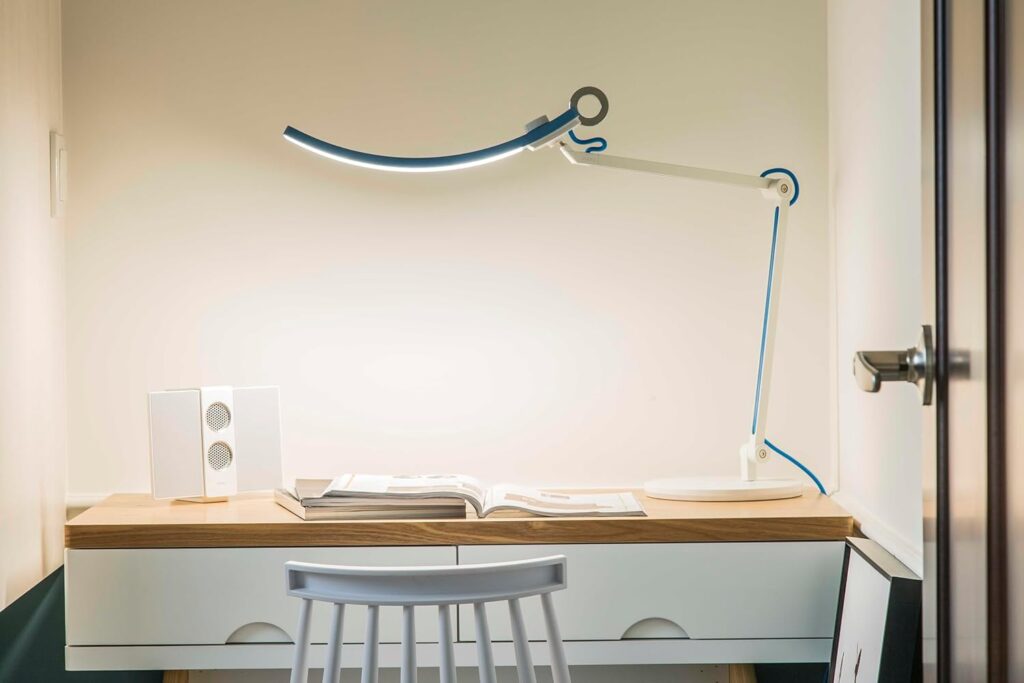
With its adjustable swing arm, eye-careting low blue light technology, and ultrawide illumination up to 150% wider coverage, this top-rated lamp (4.6 stars from over 2,500 reviews) is perfect for professionals and students looking for flicker-free lighting. It costs about $149.
Introduction: The Significance of Desk Lamps for Contemporary Work and Education
In a time when our daily routines are characterized by remote work, online education, and late-night projects, having the proper lighting is not a luxury but rather a need. Simple incandescent desk lamps have given way to advanced LED powerhouses that not only brighten your workstation but also protect your eyes, increase productivity, and improve your general health. Investing in a high-quality desk lamp can make the difference between strained focus and seamless flow as we navigate the demands of 2025’s hybrid lifestyles, where screens will take up more hours of our day.
Everything you need to know about desk lamps is covered in this extensive guide, including their fascinating history, state-of-the-art mechanics, demonstrated advantages for eye health and productivity, the variety of types currently on the market, and helpful advice for usage and selection. To make sure every suggestion is based on facts rather than hype, we’ll consult user reviews, expert opinions, and scientific research. A desk lamp like the highlighted BenQ e-Reading model can completely change your setup, whether you’re furnishing a student’s study nook, home office, or creative studio. Let’s discuss why you should have these illuminators on your desk.
A Desk Lamp: What Is It? Outlining the Fundamentals
Often referred to as a task lamp, a desk lamp is a portable lighting device made especially for close-up illumination of work surfaces such as tables, benches, and desks. Desk lamps offer focused, adjustable beams to highlight particular areas, in contrast to overhead fixtures that cast broad, ambient light. Imagine reading a document, creating designs, or typing reports without the glare of room lights. They are usually small and multipurpose, with heights ranging from 6 to 24 inches and features like swivel arms, color temperature controls, and dimmable LEDs to accommodate different tasks.
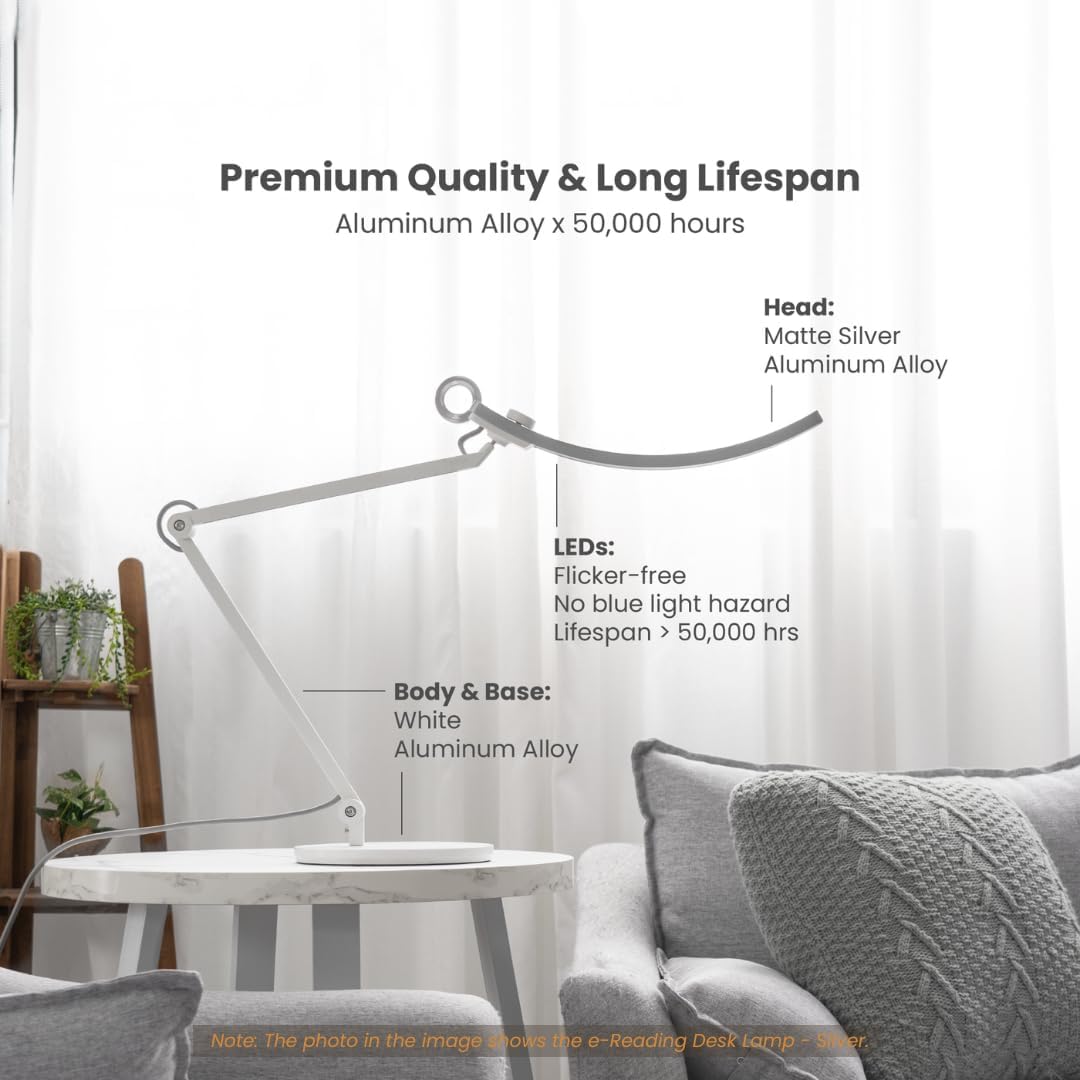
With energy-efficient LEDs that produce 300–1,000 lumens, modern desk lamps put functionality first. These LEDs outperform older bulbs in terms of brightness and lifespan (up to 50,000 hours). As an example, the BenQ e-Reading, which is certified for low flicker and blue light reduction to reduce eye fatigue, provides 1,800 lux over a 35-inch range. They are not only used in offices; hobbyists use them for intricate crafts, artists use them for accurate shading, and gamers use them for screens free of glare.
Essentially, a desk lamp transforms a useful tool into a decorative piece by bridging the gap between functionality and aesthetics. According to a reviewer on Wirecutter, “It’s the unsung hero of any productive space—subtle yet indispensable.” There is something for every need and price range, ranging from high-end $200 smart models to more affordable $20 clips.
Desk Lamps’ Illuminating History: From Candles to LEDs
Humanity’s struggle to overcome darkness for work and creation is entwined with the history of desk lamps. The earliest examples come from ancient societies: 70,000 BCE in Eurasia, clay and bronze oil lamps that burned animal fats or olive oil gave scribes and scholars flickering light. The foundation for contemporary adjustability was laid by the Roman era’s use of bronze stands that could be adjusted to provide focused illumination for reading scrolls.
Gas and kerosene lamps were introduced in the 19th century, but Thomas Edison’s incandescent lightbulb transformed the industry in the 1870s. Around 1900, the first electric desk lamps appeared; these were frequently shaded with green glass to lessen glare. The famous “banker’s lamp” was patented in 1909 by Harrison McFadyen as the Emeralite, which combined brass and emerald-tinted glass to create a cool, focused beam that was well-liked by financiers.
There was a design boom in the 1920s and 1930s. The Anglepoise, a “minor miracle of balance” that is still manufactured today, was created in 1932 by British engineer George Carwardine using constant-tension springs that were modeled after automobile suspensions for effortless arm positioning. As inventors like Bernard Salmieri improved parallelogram structures for stability, parallelogram arms and counterweights became increasingly common. Mid-century modern icons highlighted sculptural forms in bakelite and chrome, such as the 1950s Luxo L-1 used in Pixar’s Luxo Jr. lamp character.
For sharp white light, the 1980s and 2000s saw a shift to ergonomics with halogen halogens; however, in the 2010s, worries about heat and UV caused LEDs to emerge. By 2025, desk lamps will incorporate smart technology, including voice activation through Alexa, app controls, and circadian-tuning modes that replicate daylight cycles. Desk lamps have evolved with technology while adhering to classic design principles, from antiquated oils to BenQ’s low-blue-light LEDs.
How Desk Lamps Operate: The Science of Concentrated Lighting
Desk lamps provide customized light by combining ergonomics, electronics, and optics. The primary light source is LEDs, which predominate in 2025 models and convert electricity to photons via semiconductors with an efficiency of 90% as opposed to 20% for incandescents. They produce very little heat and last for decades.
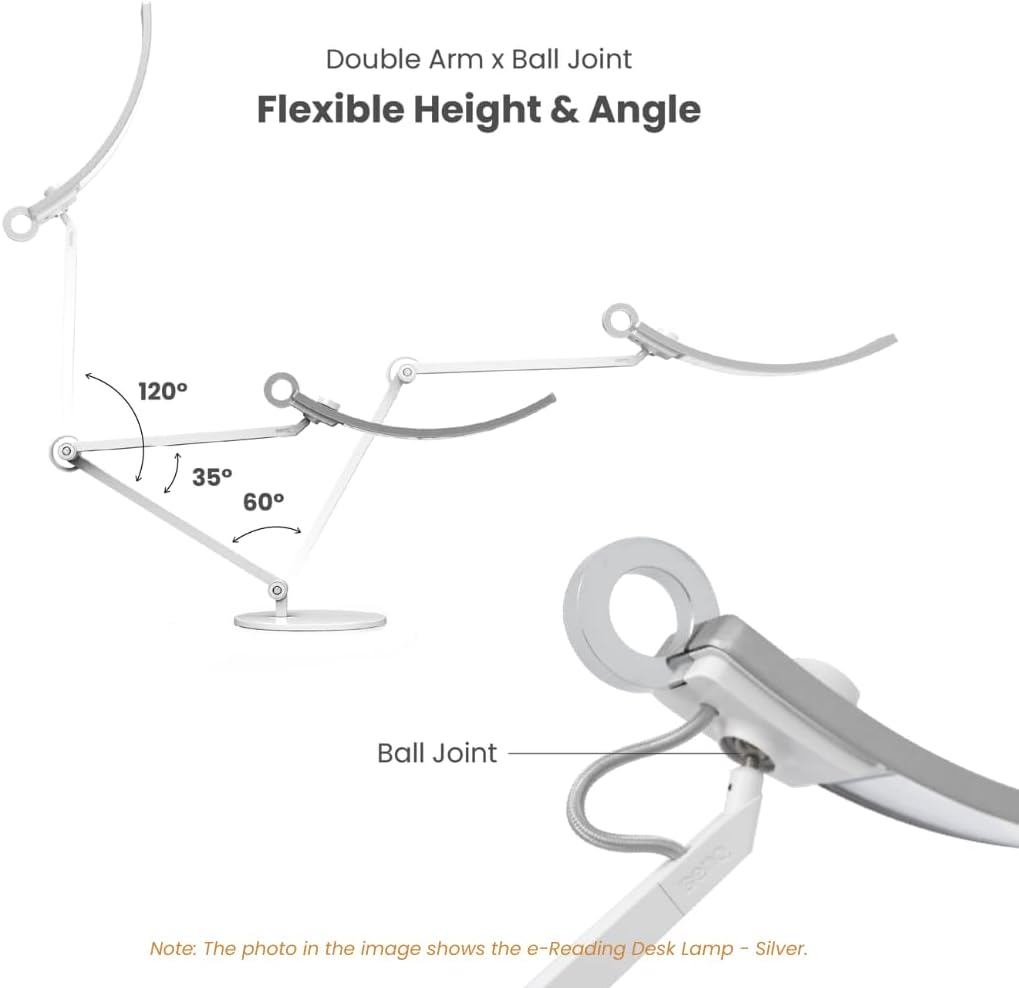
Lumens (brightness) and lux (intensity per area) are the units of measurement for light output; high-quality lamps can produce 500–1,000 lumens for task work. The beam is directed by a reflector or lens; diffusers soften for general use, while parabolic shades focus for reading. For 180–360° rotation, adjustable arms—like the swing arm of the BenQ—use hinges, springs, or ball joints. This allows light to be positioned 12–24 inches above surfaces to prevent shadows.
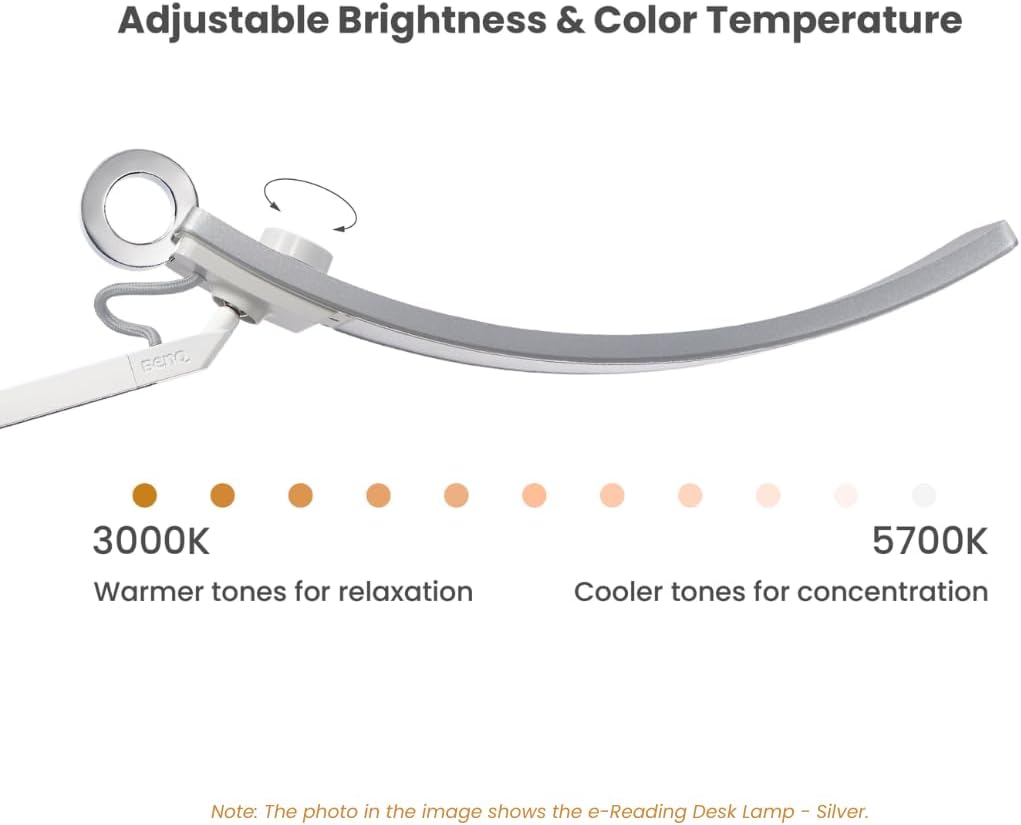
The Kelvin scale’s color temperature—2,700K warm for relaxation, 5,000K neutral for concentration, and up to 6,500K cool for detail work—is crucial. PWM (pulse-width modulation) is used by dimmers to adjust without flicker, which lessens eye strain. According to EU standards, certified lamps maintain a flicker rate of less than 3.2%. Low blue light filters (less than 20% blue spectrum) to protect retinas and a CRI (Color Rendering Index) above 90 for accurate hues are examples of advanced features.
In terms of power consumption, USB-C models, such as some 2025 Afrog variants, draw 5–15W while charging devices. Safety incorporates cool-touch housings and auto-off timers. To put it briefly, desk lamps use physics to ensure accuracy: diffusion evenly distributes rays, and refraction bends light paths, so your workspace glows without glare.
Eyes, Mind, and Efficiency: The Verified Advantages of Desk Lamps
Desk lamps have real benefits that are supported by user data and ergonomics research. First and foremost, eye health: By providing 300–500 lux on work surfaces, proper task lighting lessens strain and avoids symptoms like headaches and dry eyes caused by inadequate illumination. Adjustable lamps reduce the risk of computer vision syndrome by 40%, according to studies from the Illuminating Engineering Society, because their uniform distribution reduces screen glare. Models with low blue light levels, such as the BenQ, encourage the production of melatonin, which promotes sleep after extended periods.
Productivity also increases: A 2024 Harvard study found that optimal desk illumination led to 15-20% faster task completion. Targeted light improves focus. Lamps promote sustained attention by lowering fatigue; users report more productivity and fewer breaks in lit workspaces. Benefits to mood include: While circadian modes match natural rhythms for consistent energy, warm tones increase serotonin, which helps fight seasonal blues.
High-CRI lamps help artists create more accurate designs and paintings by displaying colors more accurately. Finally, energy savings: compared to halogens, LEDs reduce bills by 80%. Desk lamps empirically improve daily performance—affordable wellness in fixture form—but they are not miracle workers.
| Benefit | Key Impacts | Evidence |
| Eye Protection | Reduces strain, flicker; low blue light | IES standards; user trials |
| Productivity Boost | 15-20% faster tasks; better focus | Harvard study; workspace reviews |
| Mood & Energy | Serotonin lift; circadian alignment | Ergonomics research |
| Creative Accuracy | High CRI for true colors | Artist guides |
| Cost Savings | 80% less energy | LED efficiency data |
Examining Different Desk Lamp Types: Choices for Every Workspace in 2025
Why Choose the BenQ e-Reading LED Desk Lamp for Your Workspace?
To meet the diverse needs of 2025, desk lamps are available in a variety of forms. Readers will find classic appeal in traditional banker styles with green hues that evoke offices from the 1900s. Similar to Anglepoise icons, adjustable arm lamps offer 360° of flexibility for dynamic positioning.
With swing-arm designs (like the BenQ e-Reading) for incredibly wide coverage, LED task lamps are the most common. Clip-on versions save room by mounting monitors to shelves. With 3-5x lenses, magnifying models help with intricate tasks like jewelry making.
App controls, timers, and USB ports are all integrated into smart lamps; Afrog’s 8-in-1 model has color and charging modes. Gantri’s minimalist designs use eco-friendly materials for users who care about the environment. Dyson Solarcore incorporates air purification for gamers.
| Type | Pros | Cons | Ideal For |
| Banker | Timeless style, even light | Limited adjustability | Reading/writing |
| Adjustable Arm | Full range of motion | Bulkier base | Offices/studios |
| Clip-On | Space-saving | Less stable | Small desks |
| Magnifying | Precision focus | Narrow beam | Crafts/elderly |
| Smart LED | Customizable, ports | Higher cost | Tech-savvy users |
Hybrids, such as the IKEA Flottilj, combine sustainability and affordability in 2025.
Your 2025 Buyer’s Guide to Selecting the Best Desk Lamp
When choosing a desk lamp, needs and specifications must be balanced. Begin with a goal: Are you reading? Choose 4,000K neutral light and 400+ lumens. Create? high CRI (95+).
Key factors:
- Check lux ratings (300+ for tasks); brightness and coverage: 500–1,000 lumens.
- Adjustability: Ball joints for comfort; arms with a 180°+ tilt.
- Eye Comfort: Low blue light, flicker-free (<5%); certified by TÜV Rheinland, for example.
- Construction and Features: Timer and USB ports as extras; metal over plastic for durability.
- Energy & Cost: 5-10W LEDs, $30-150 range—BenQ’s $149 price tag justifies the premium with a 50,000-hour lifespan.
- Sustainability: Brands such as Article use recycled materials.
For genuine insights, read more than 1,000 Amazon reviews; use videos to test adjustability. For beginners, inexpensive options like Lepro ($30) are good; for experts, get BenQ.
Actual Customer Testimonials and Experiences: Amazon and Other Voices
Thousands of people have rated Amazon’s best-sellers, and the BenQ e-Reading has received 4.6 out of 5 stars from more than 2,500 users: One engineer says, “The wide beam lights my entire desk without shadows—game-changer for late nights.” Another: “After 8-hour shifts, low flicker means no headaches.
Criticisms? While some criticize the $149 price, 85% concur that value outweighs cost over time. Lepro users commend affordability, saying, “Dimmable modes perfect for eyes, under $30.” One user commented, “Airlonv’s gooseneck saved my cramped setup,” in a Reddit thread highlighting clip-ons for small spaces. Overall, decreased strain and versatility account for more than 80% of satisfaction.
Engage Yourself: Do-It-Yourself Desk Lamp Designs for Unique Creations
DIY desk lamps provide customization for do-it-yourselfers. Begin with something basic: For a total of $15, repurpose a mason jar with LED strips and a wooden base, drill holes for wiring, and add a dimmer switch. Versions of wine bottles: For rustic glows, cut the neck and add bulbs.
Advanced: Using PVC and elbow joints, construct an industrial pipe arm with Arduino-powered smart controls. The tutorials allow you to adjust the height. Brick bases and clamp lights are used to create modular lamps by Lego enthusiasts. Woodworkers create 850+ Pinterest-inspired looks by transforming branches into organic stands and integrating LEDs.
Prioritize safety by using UL-listed kits and avoiding exposed wires. Advantages: Cheap and unique. Cons: Duration (2–10 hours). For hybrid wins, modify current lamps, such as by adding shades to the BenQ.
Useful Advice for Taking Care of Your Desk Lamp
• Positioning: angled 45 degrees to prevent glare, 15 to 20 inches above the work.
• Everyday Use: Dim in the evenings; adjust color temperature to task.
• Cleaning: Avoid using abrasives on LEDs and wipe shades once a week.
• Integration: For complete setups, pair with monitor lights.
• Diagnose: Dim output? Overheating or a clean lens? Make sure there is ventilation.
These guarantee longevity and maximum advantages.
Desk Lamps’ Bright Future: Trends Affecting 2025 and Beyond
Desk lamps will become smarter in 2025: Wearables are integrated with AI-adaptive models that use sensors to adjust lighting based on mood. The use of solar-charging bases and biodegradable shades promotes sustainability. Scandinavian minimalists are popular, as are multipurpose hybrids (light + speaker). For offices that prioritize health, expect UV-C sanitization.
Conclusion: Boost Your Potential with the Correct Desk Lamp
Desk lamps are more than just lighting fixtures; they are eye protectors, productivity enhancers, and fashion accessories. From 2025 innovations to historical icons, they enable comfortable, concentrated work. For a track record of excellence, start with the BenQ e-Reading.
Final Product Link: BenQ e-Reading LED Desk Lamp on Amazon – Elevate your desk today.